Learning Worksheets That Don't Feel Like Homework
A worksheet is a strange thing to hand a four-year-old. It's a page of work with no obvious point, produced by an adult, and the reward for finishing it is another one.
The ones that work don't feel like that. They have something to cut out, or a picture hidden inside the counting, or a puzzle where the answer is a drawing. The learning is the same. The experience isn't.
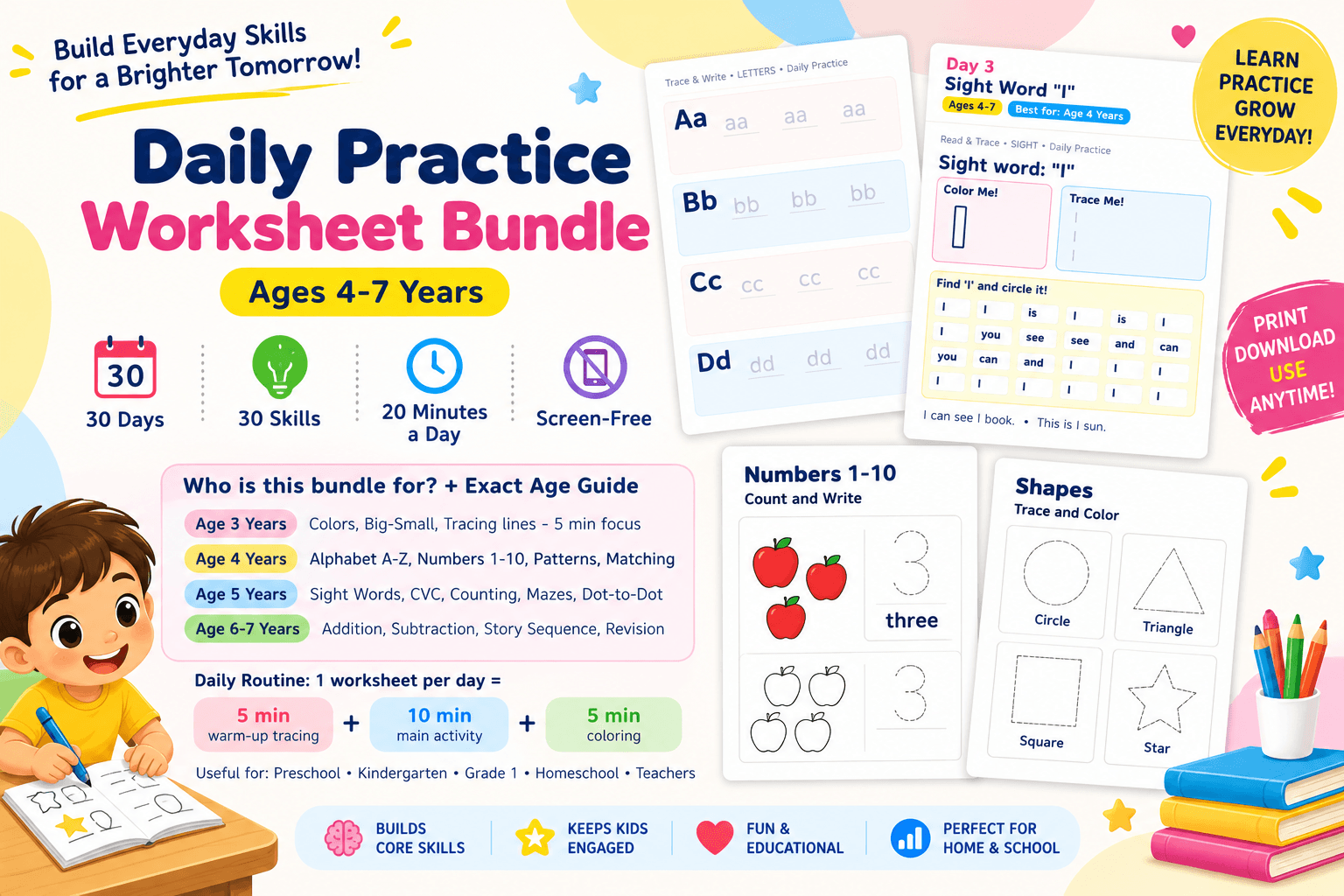
These are printable learning worksheets covering the full preschool range — alphabets, numbers, shapes, patterns, opposites, matching and cutting — for ages 1 to 9. Download the PDF, print the pages you need, print them again when you need them again.
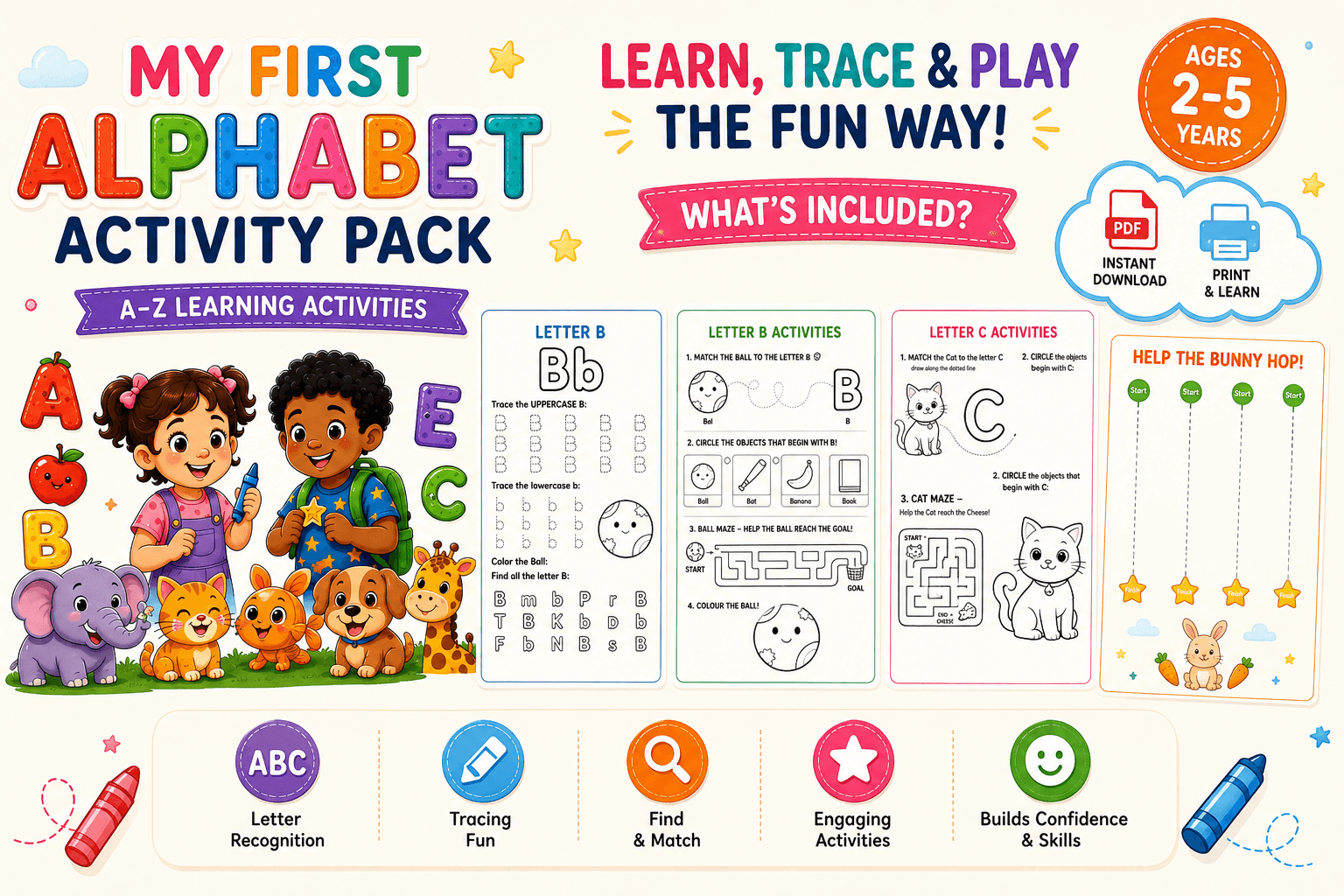
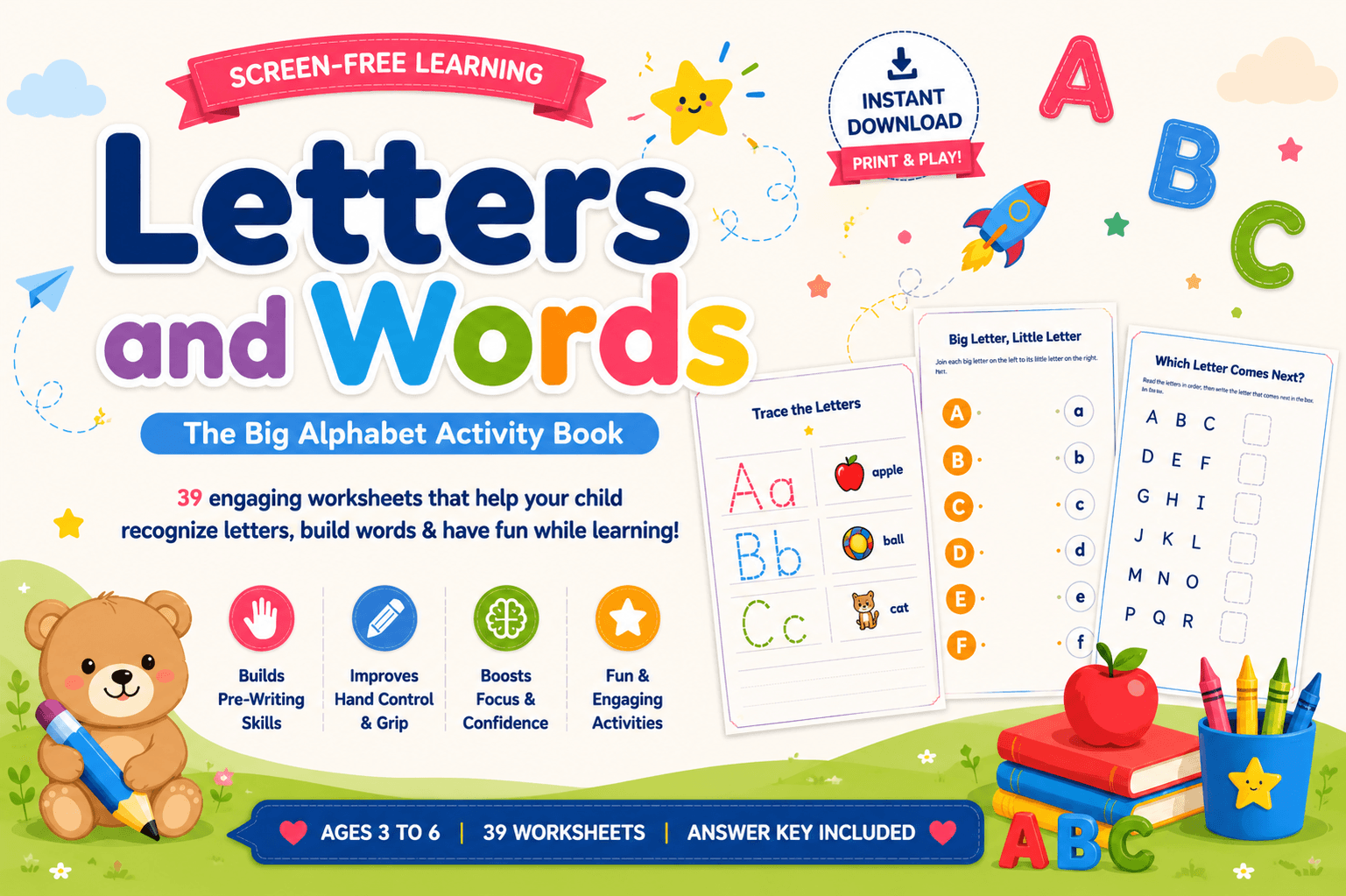
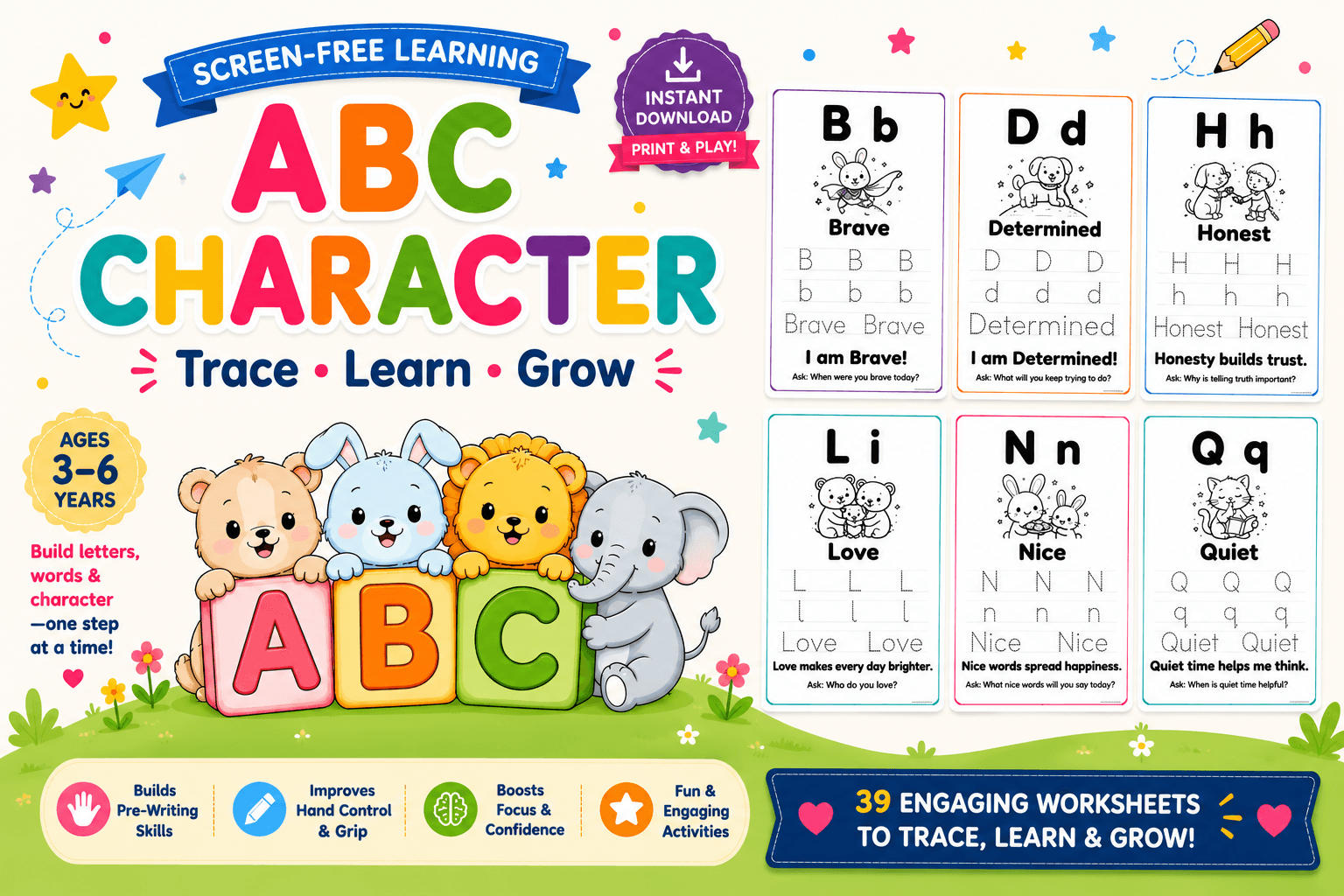
Letters and words
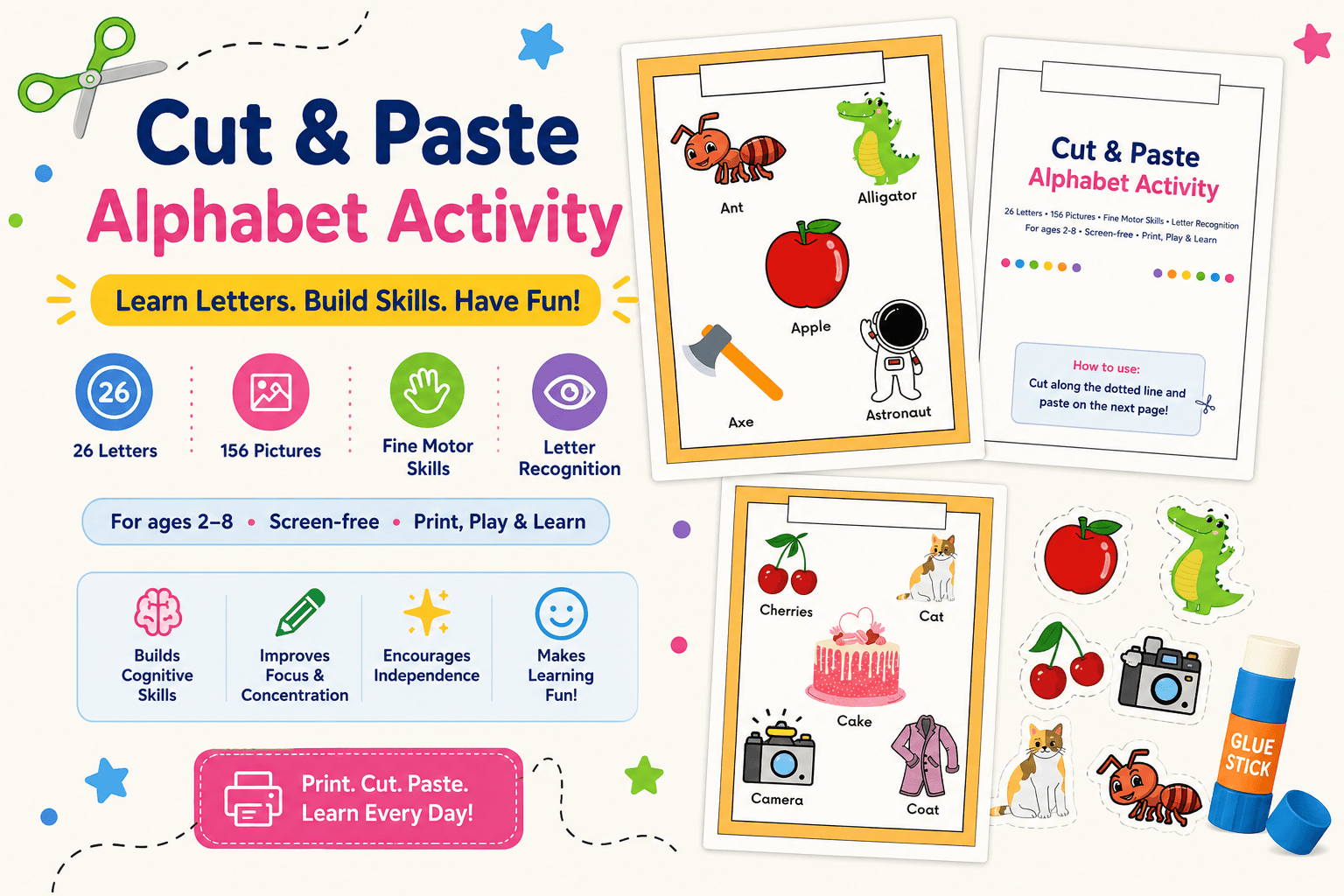
Numbers and counting
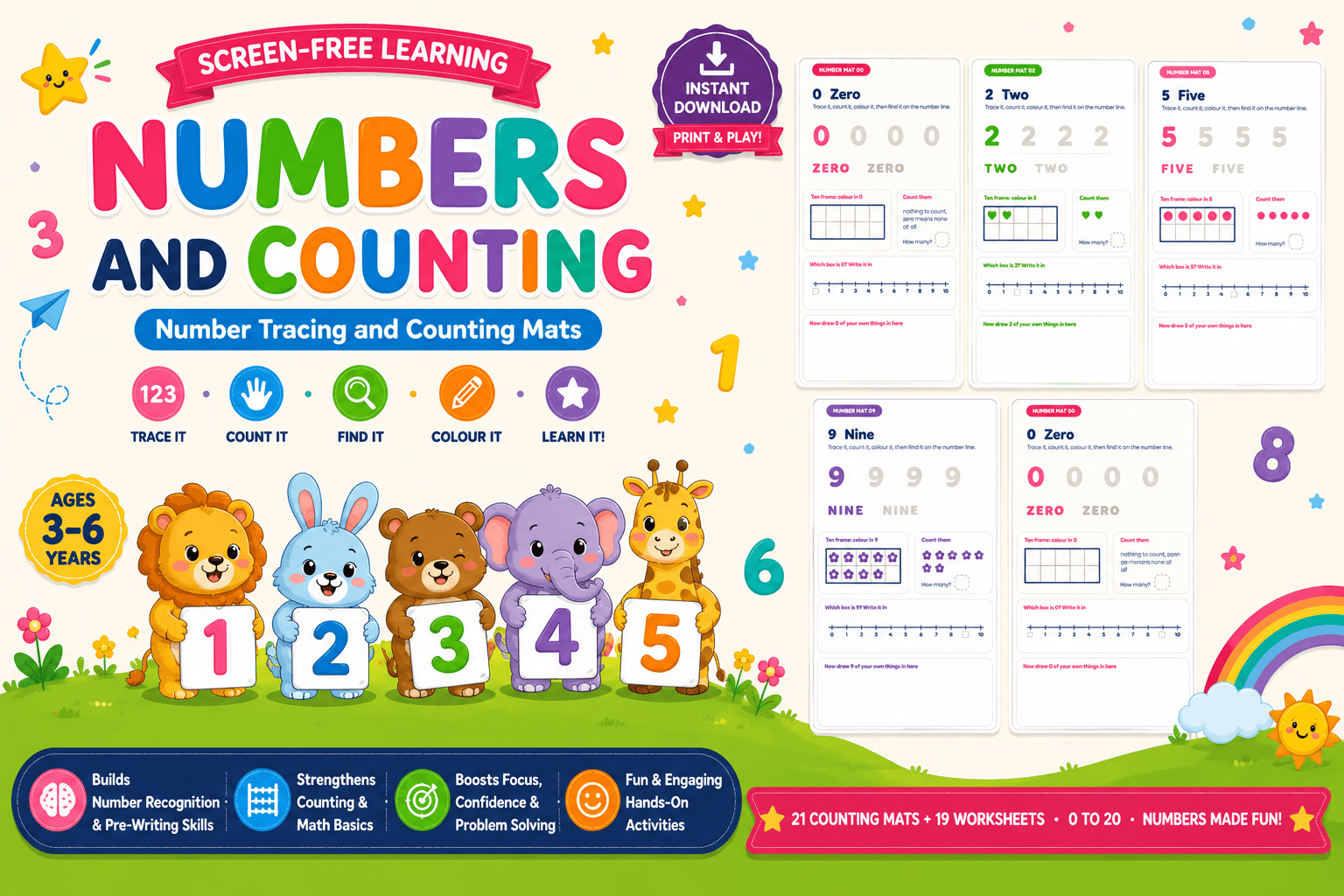
Writing and motor skills
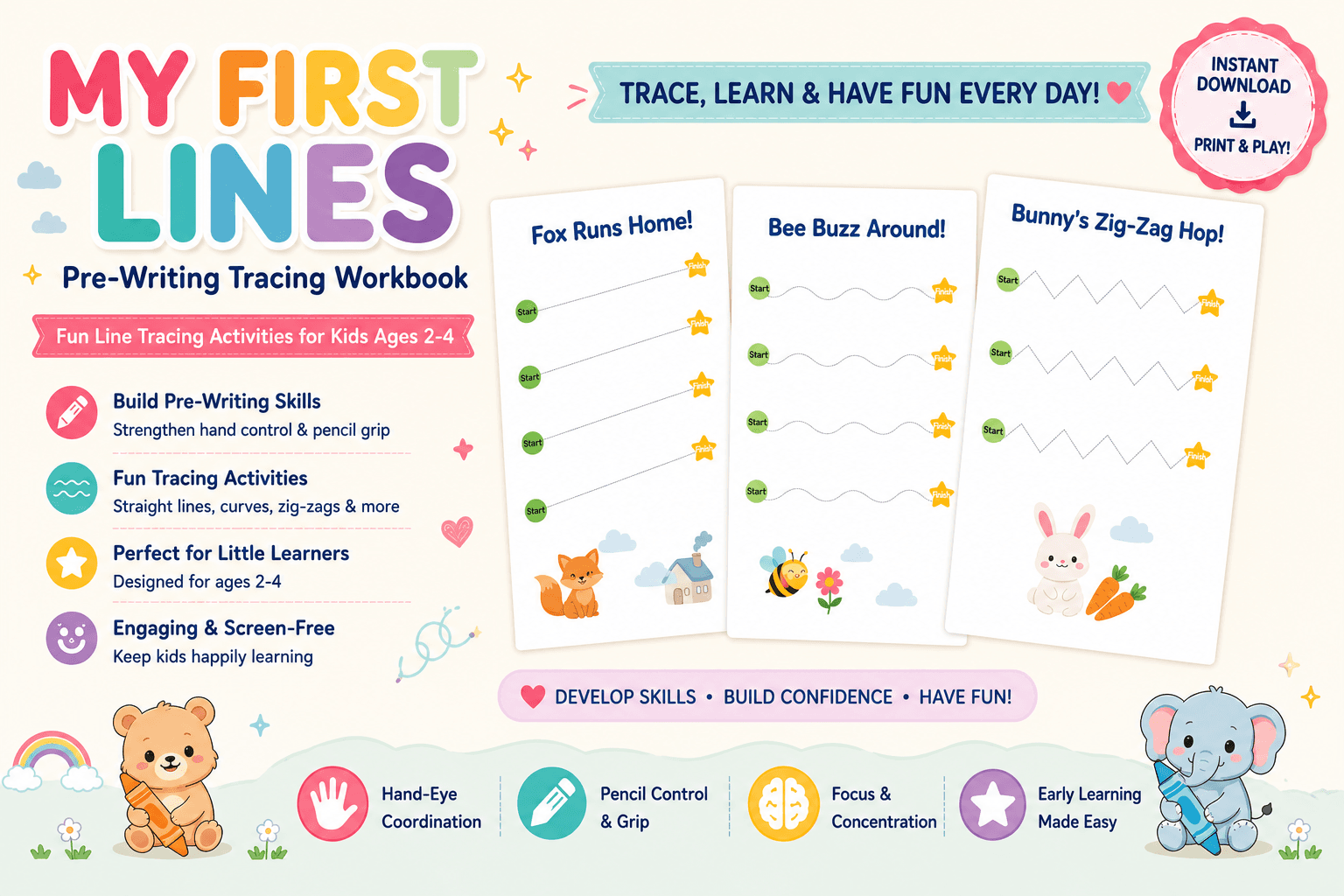
Thinking and reasoning
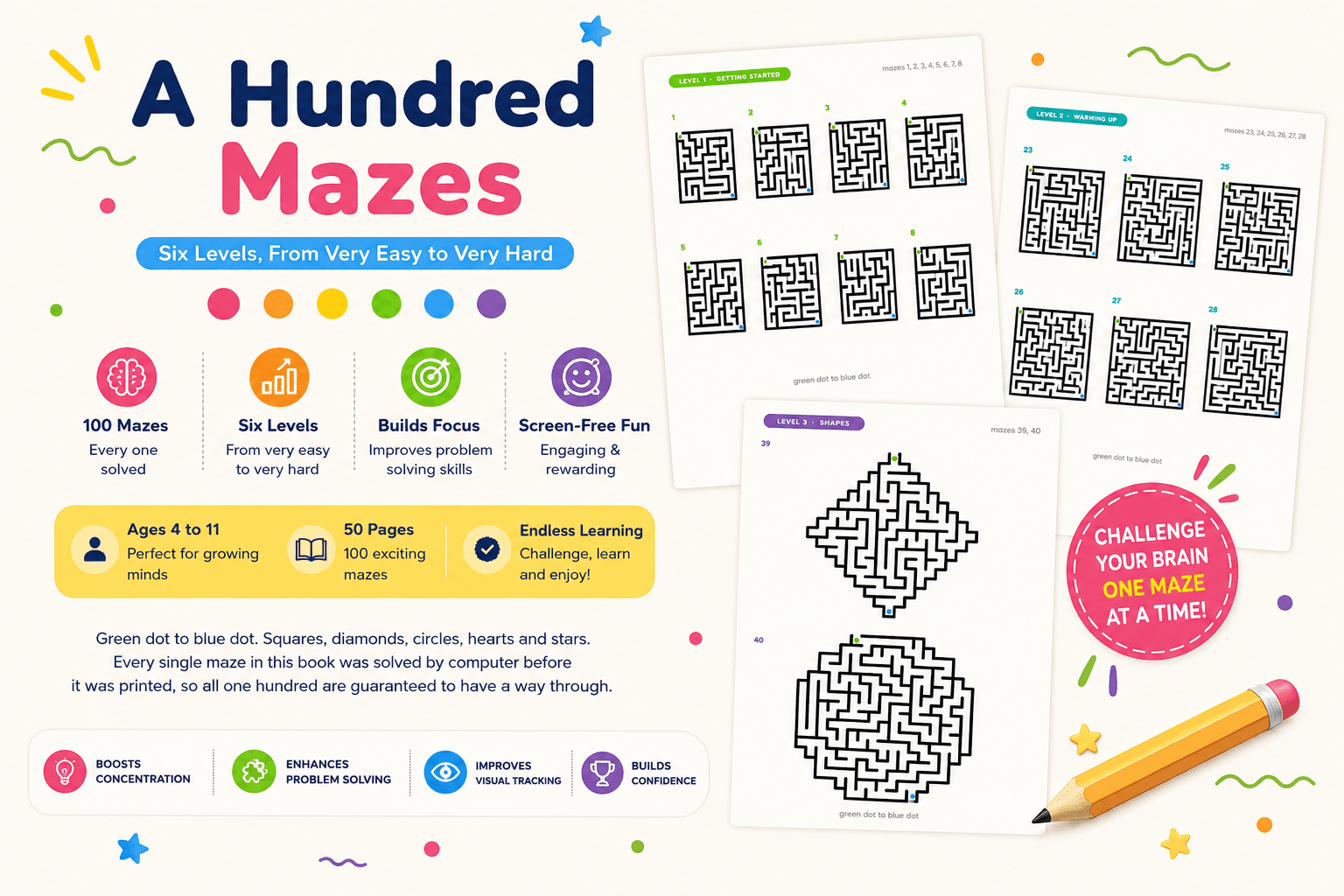
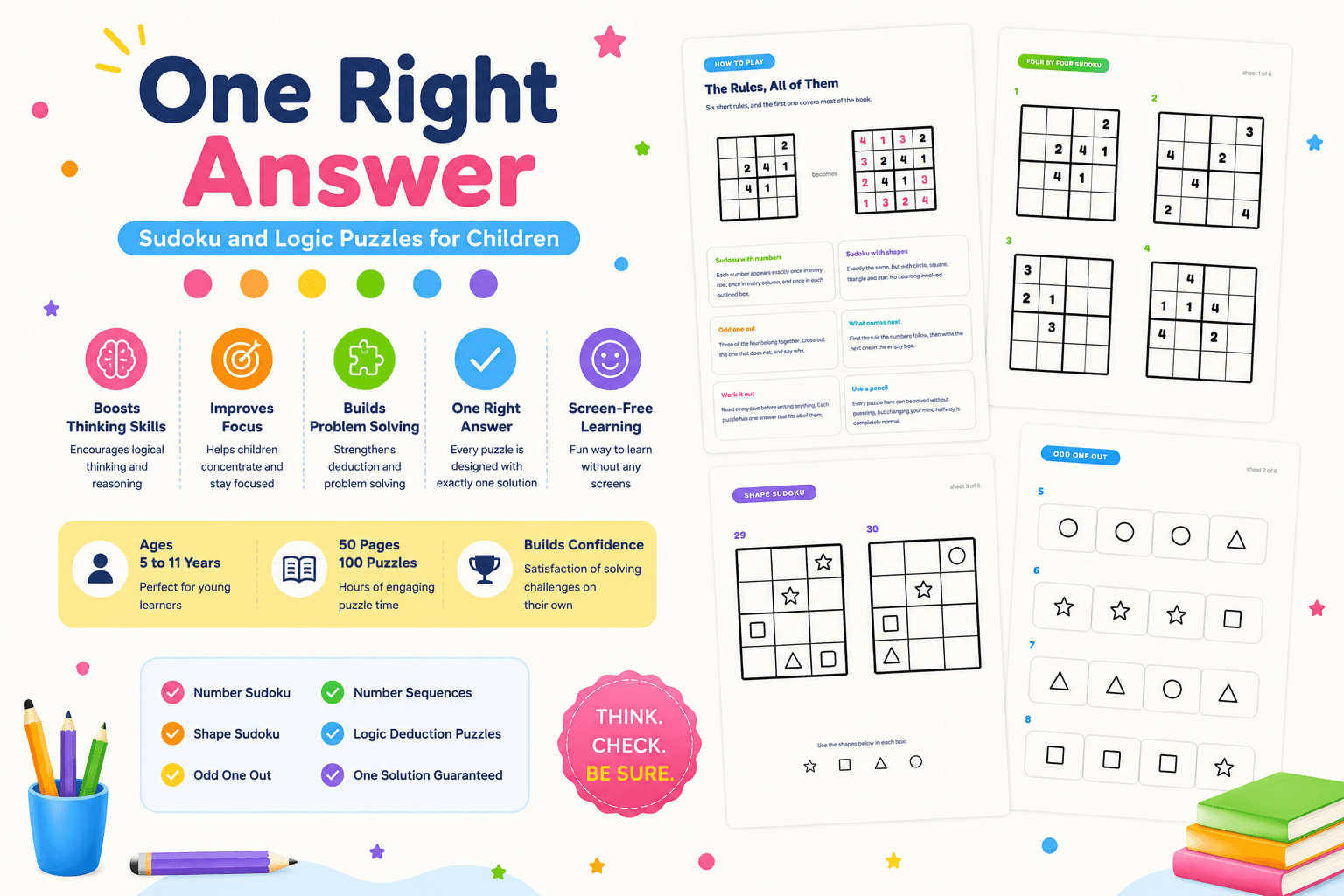
The four things preschool worksheets should cover
Strip away the packaging and preschool learning comes down to four areas. A child who's solid in all four walks into Class 1 fine.
1. Letters and sounds. Recognition, then formation, then blending into words. The sequence matters — see alphabet worksheets for the order that works.
2. Numbers and quantity.Not just counting aloud, which is memorised sound, but knowing that "5" means five things. The gap between reciting numbers and understanding quantity is where most early maths difficulty starts.
3. Hand control.Tracing, cutting, sticking, holding a pencil. This is physical development, and it can't be rushed by more worksheets — only by more practice. See tracing worksheets.
4. Reasoning.Patterns, opposites, sorting, matching, spotting differences. The most neglected of the four and arguably the most important, because it's the only one that teaches a child to notice a rule rather than remember a fact.
Most parents over-invest in area 1 and under-invest in areas 3 and 4. If you're buying one pack and your child already knows their letters, buy a reasoning one.
Opposites, patterns and shapes — the three most-searched, least-taught
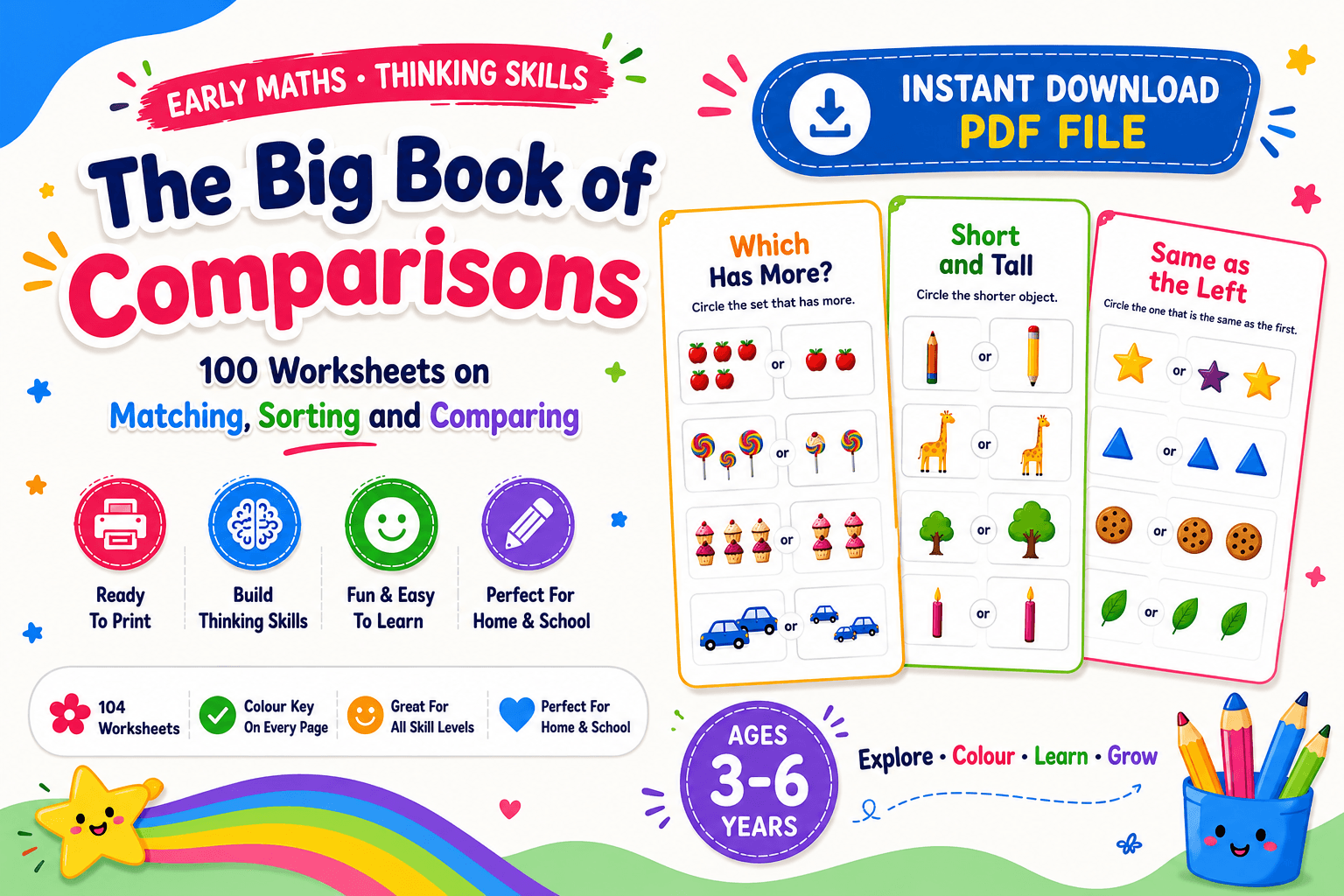
Opposites.Big/small, tall/short, full/empty, in/out. They seem trivial and they're the foundation of comparative language, which is the foundation of maths word problems later. Big Book of Comparisons covers these with picture matching rather than text, so a pre-reader can do them alone.
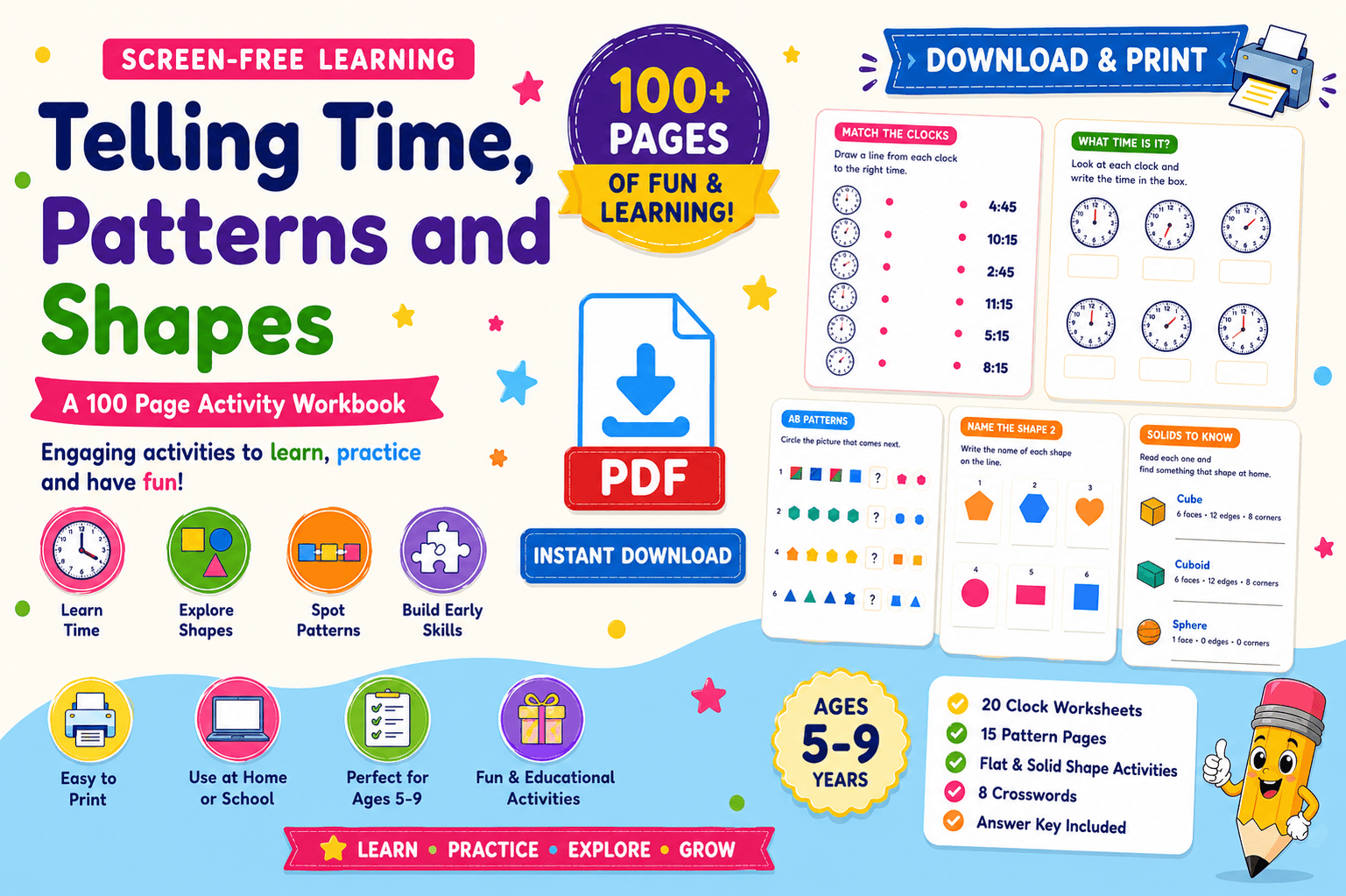
Patterns.Continue the sequence: red, blue, red, blue, ___. This is the first time a child is asked to work out a rule instead of recall an answer, and it's genuinely hard the first few times. Patterns appear in every Indian preschool syllabus and in class 1, 2 and 3 maths papers.
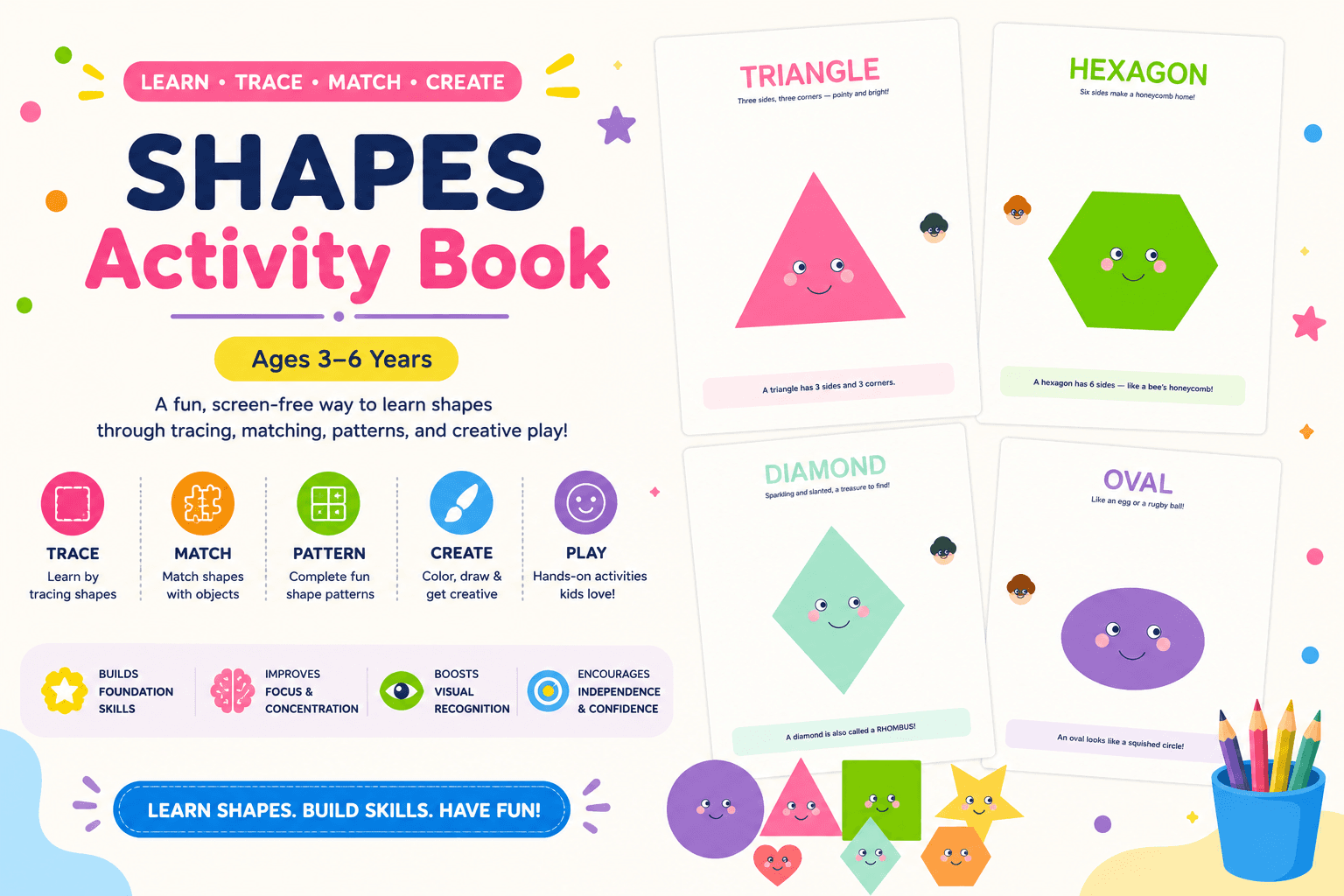
Shapes. Circle, square, triangle, rectangle, then 3D. Shape recognition feeds directly into letter recognition — a child who can distinguish a triangle from a square has the visual discrimination that separating b from d requires.
All three are in Time, Patterns & Shapes.
Making worksheets not feel like work
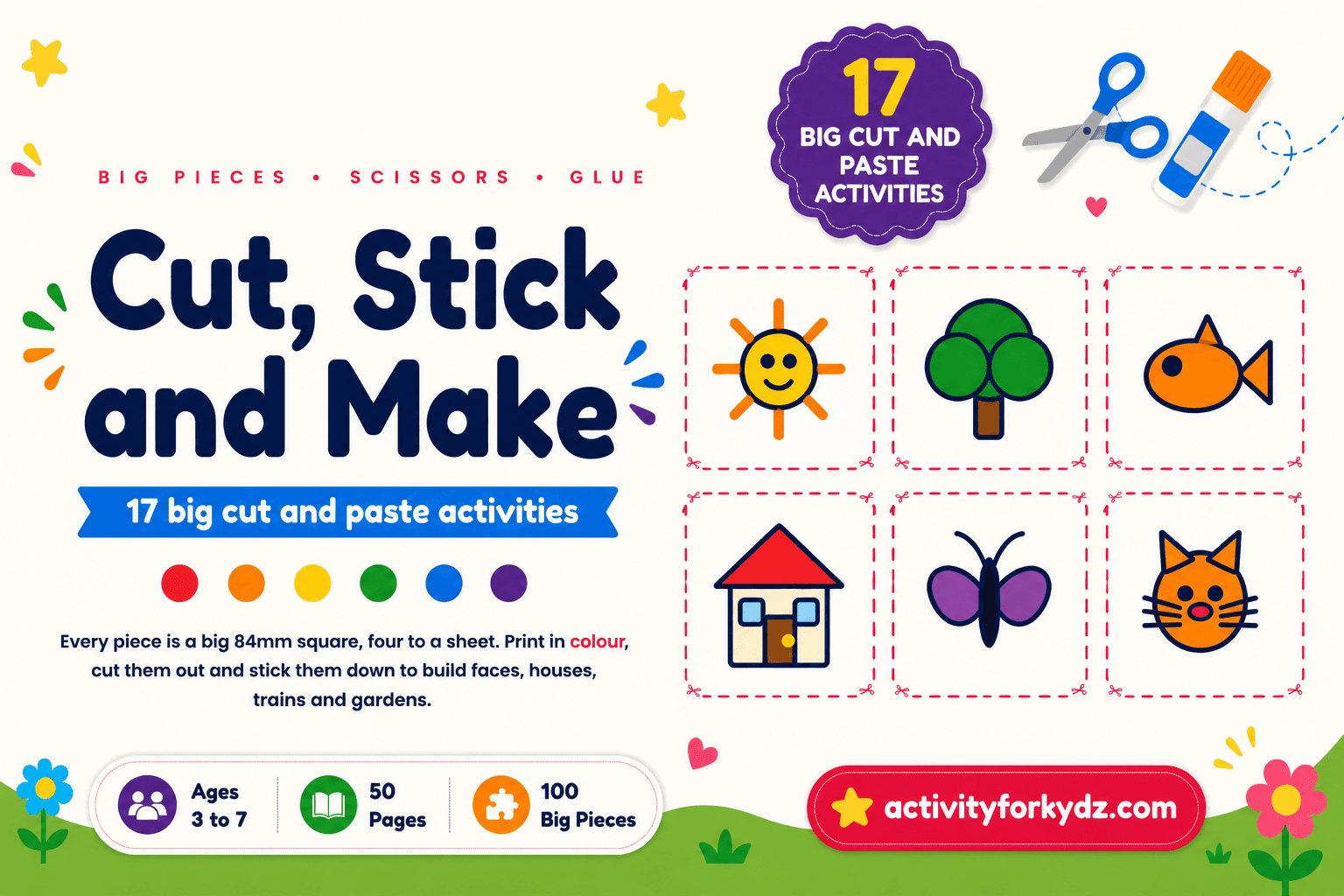
Cut something out. Anything involving scissors gets a completely different reception than the same content on a plain page. This is why Cut, Stick and Make gets finished when other packs don't.
Do it standing up. Tape the page to a wall or the fridge. Costs nothing, changes the activity entirely, and is better for the shoulder and wrist development that handwriting needs.
Let them pick the page. Print four, fan them out, let your child choose. The choosing is what makes it theirs.
Stop early. End while they still want more. This is the single highest-leverage thing on this list and the hardest for parents to do.
Don't correct everything. Mark what's right. A page returned covered in corrections teaches a child that worksheets are where you find out you're wrong.
How to sequence a year
| Months 1–3 | Months 4–6 | Months 7–9 | Months 10–12 |
|---|---|---|---|
|
|
|
|
The Learning Pack Combo covers roughly this whole progression in one bundle. It currently bundles all 9 learning packs for ₹399 — see the Learning Pack Combo.
More from activityforKydz
Common questions
These learning worksheets cover ages 1 to 9 across the range. My First Lines starts at 1. Each pack states its own age band and school stage.