Nursery Worksheets Your Child Will Actually Sit Through
Nursery is the year everything is a first. First time holding a pencil properly. First time recognising that a shape on a page is a letter and not just a squiggle. First time being asked to sit at a table and finish something.
Most worksheets sold for this age get it wrong in one of two directions. Either they're too easy — a page of circles to colour, done in ninety seconds — or they jump straight to writing letters, which a three-year-old's hand is not ready for.
These are the ones in between. Printable nursery worksheets that start with the strokes that letters are built from, then move to letter recognition, then to matching and counting. Download the PDF, print at home, and print it again next month when the first copy is covered in crayon.
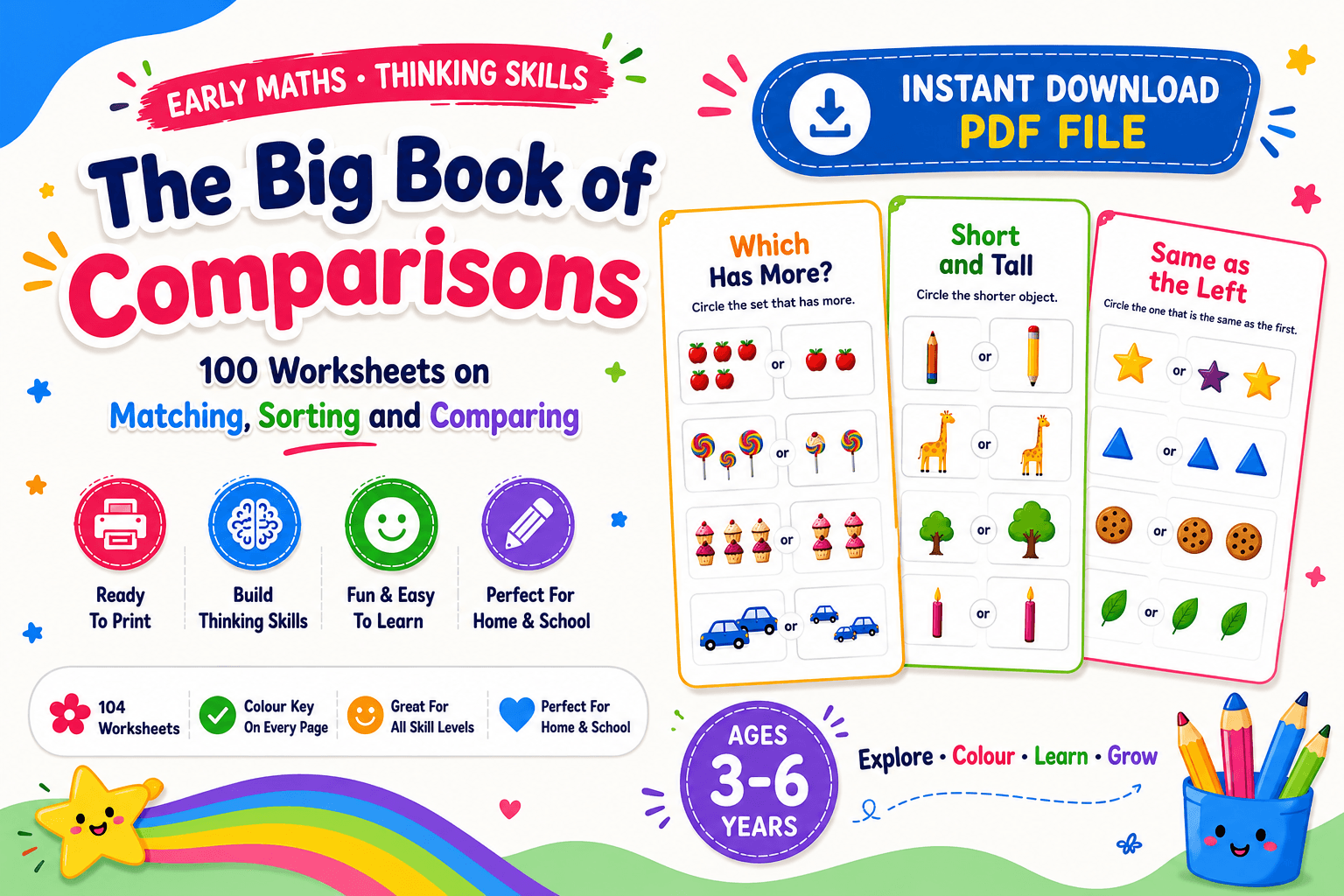
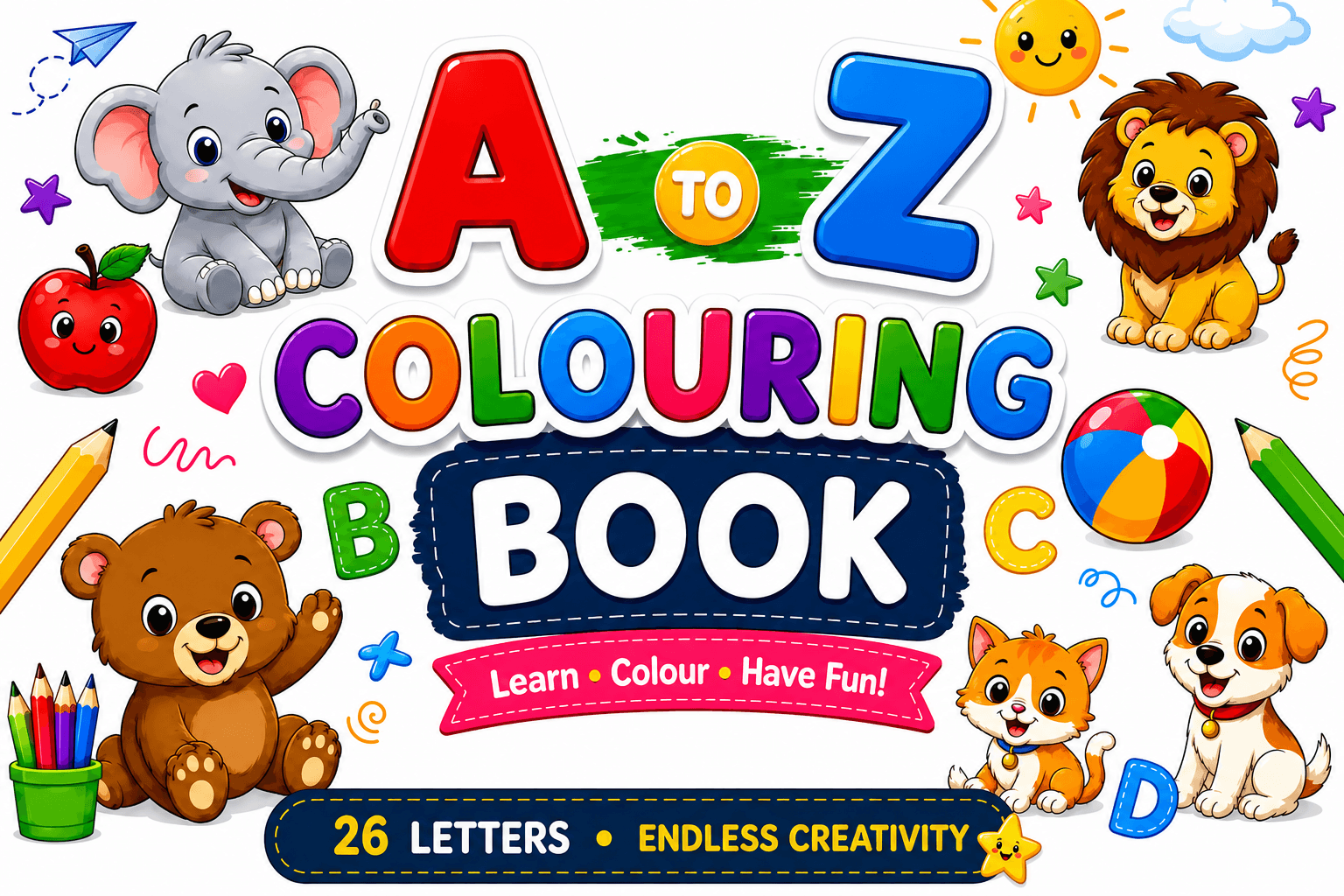
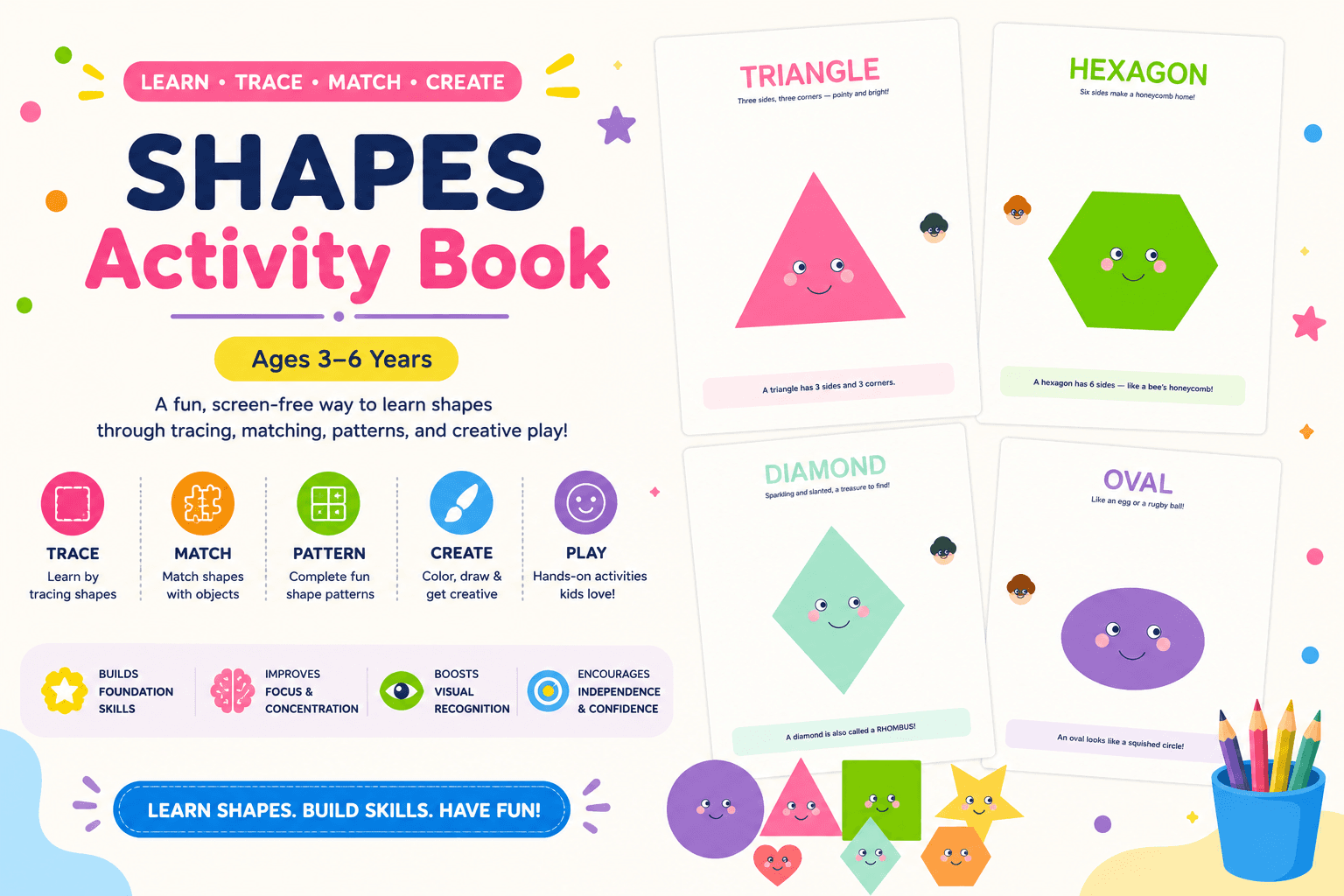
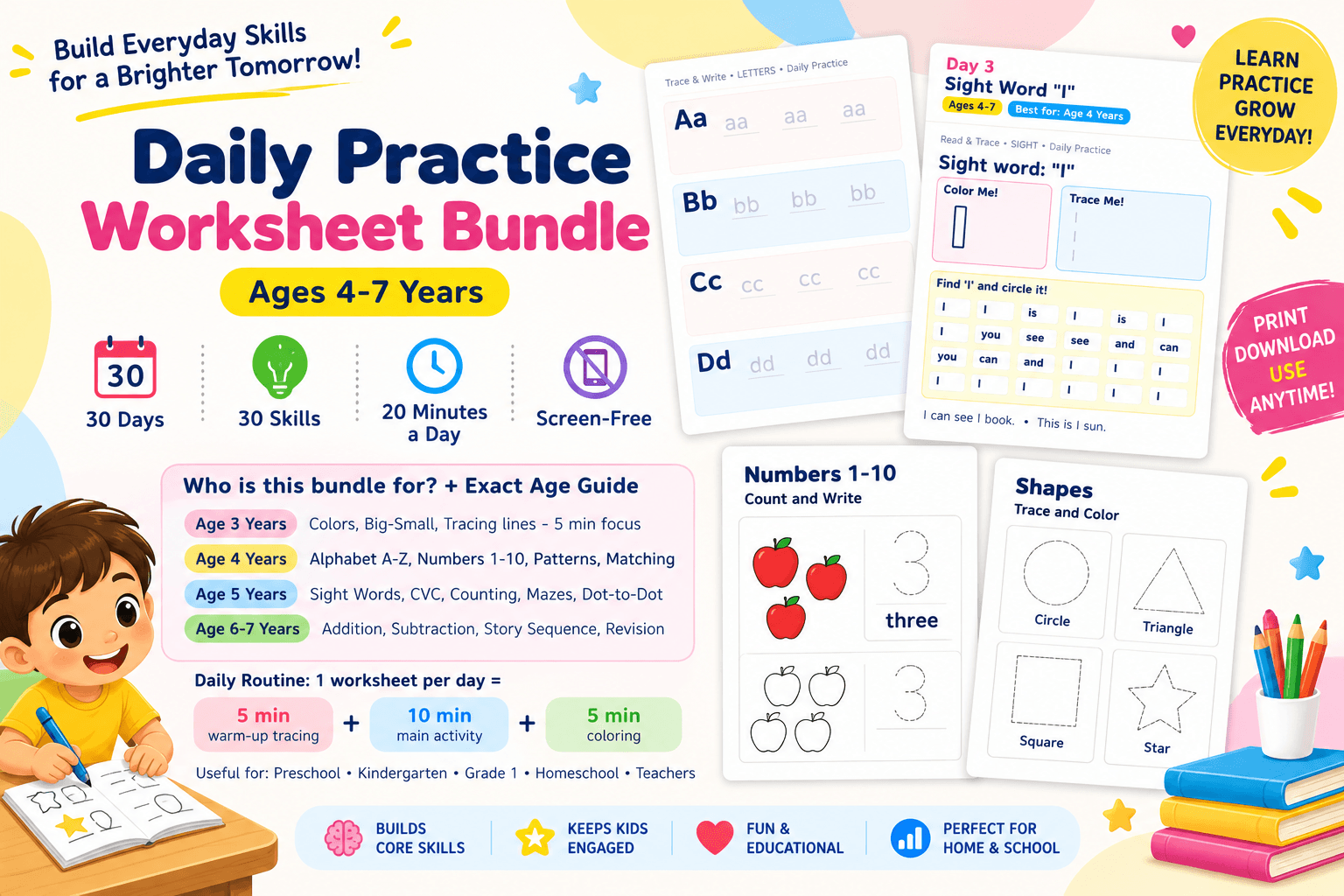
What nursery worksheets should cover
Indian nursery classrooms vary, but the ground they cover in the year is fairly consistent.
By the end of nursery most children are expected to:
- Recognise all 26 capital letters by sight
- Trace straight lines, curves, slants and zigzags cleanly
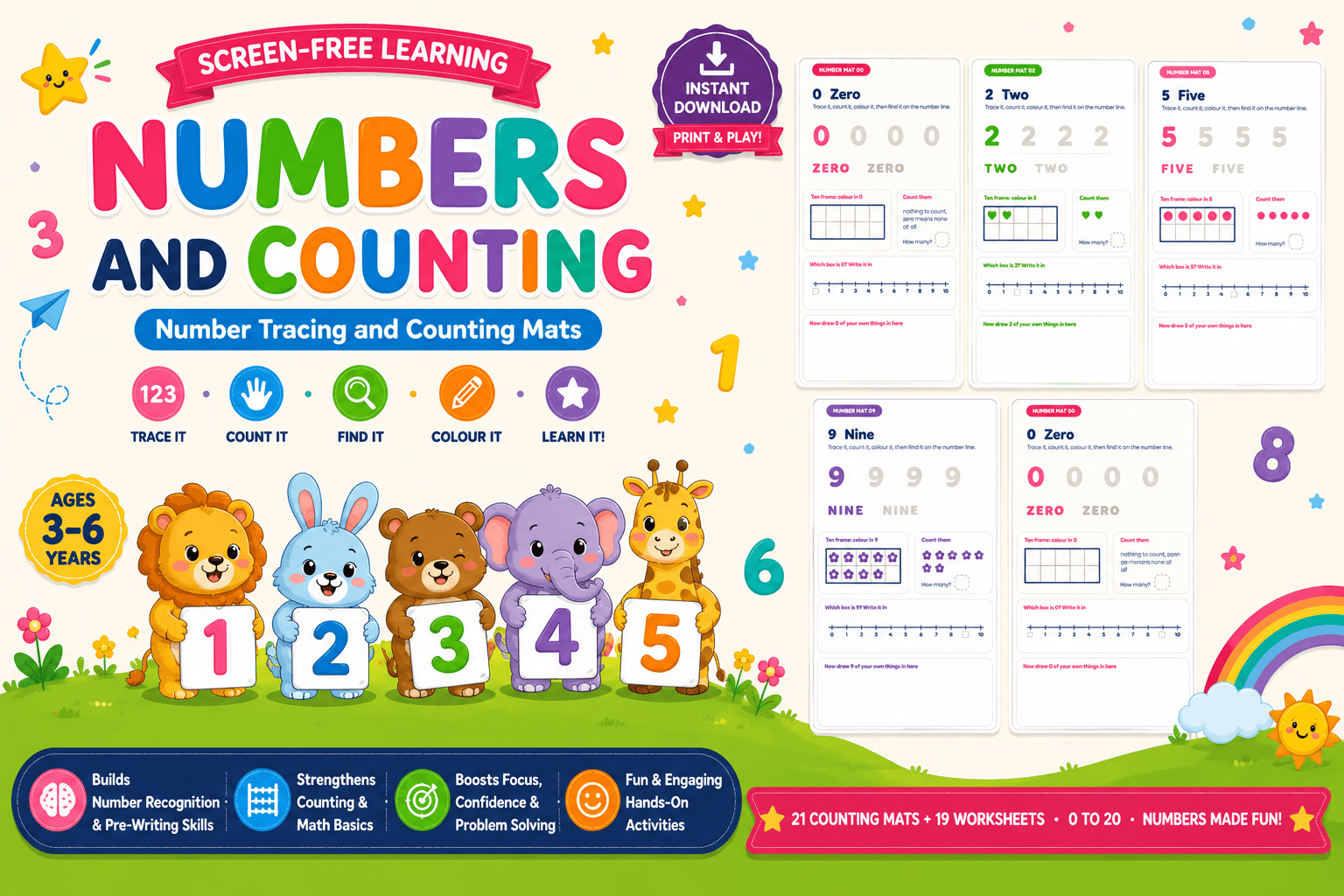
- Count aloud to 20 and match numbers 1–10 to quantities
- Identify basic shapes — circle, square, triangle, rectangle
- Understand simple opposites — big and small, in and out, up and down
- Hold a pencil in a tripod grip rather than a fist
- Sit with one activity for ten to fifteen minutes
Worksheets are useful for exactly five of those seven. The pencil grip and the sitting still come from repetition, not from the page design — which is why the volume of practice matters more than which specific worksheet you use. That's the argument for printables over a physical book: you can print the same page four times.
What to start with if your child has never used a worksheet
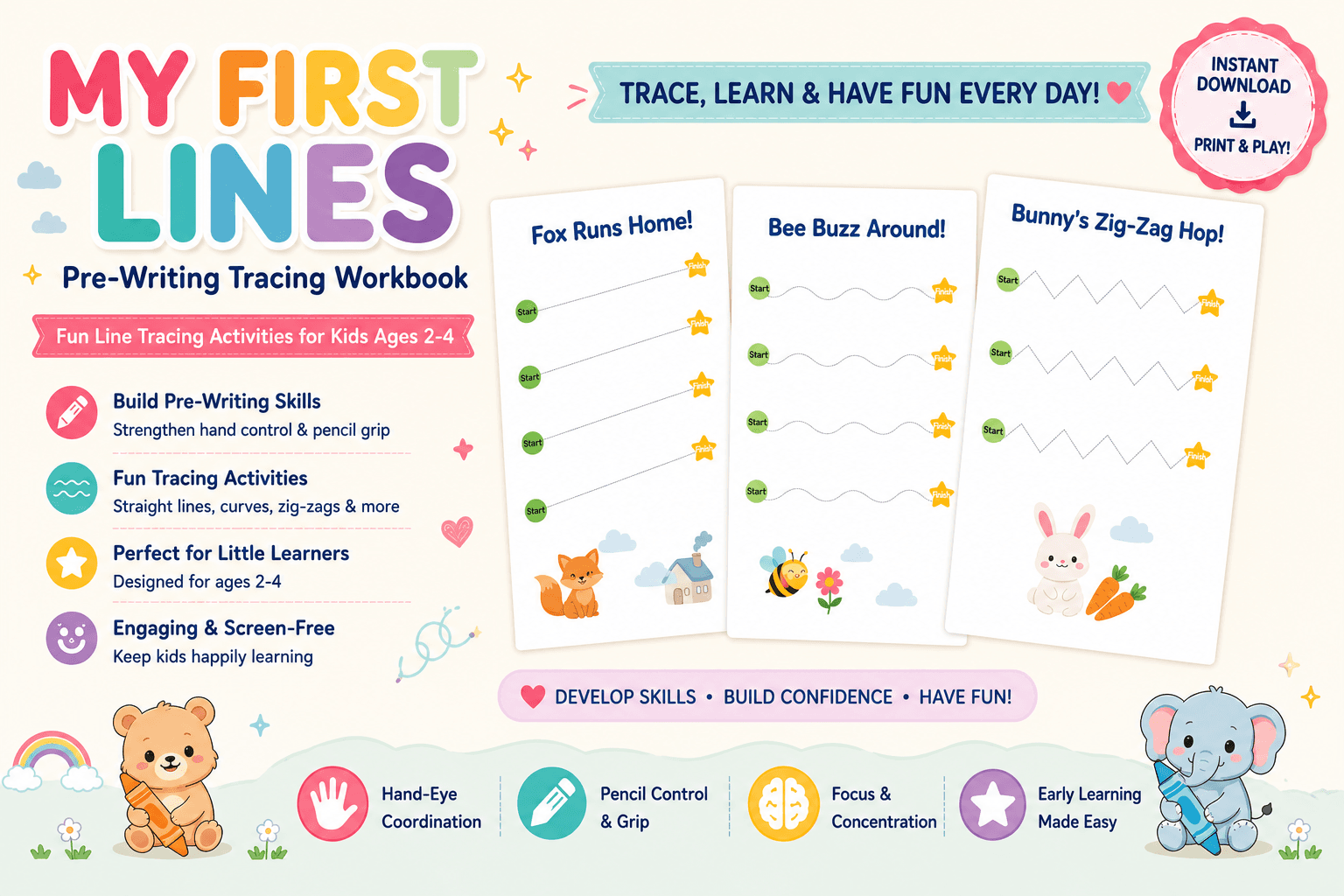
Start with My First Lines. It contains no letters at all.
That sounds like a step backwards, but every letter in English is made from four strokes — the straight line, the curve, the slant and the circle. A child who can trace those four cleanly will pick up letter formation in a fraction of the time of a child who's been copying letter shapes without them.
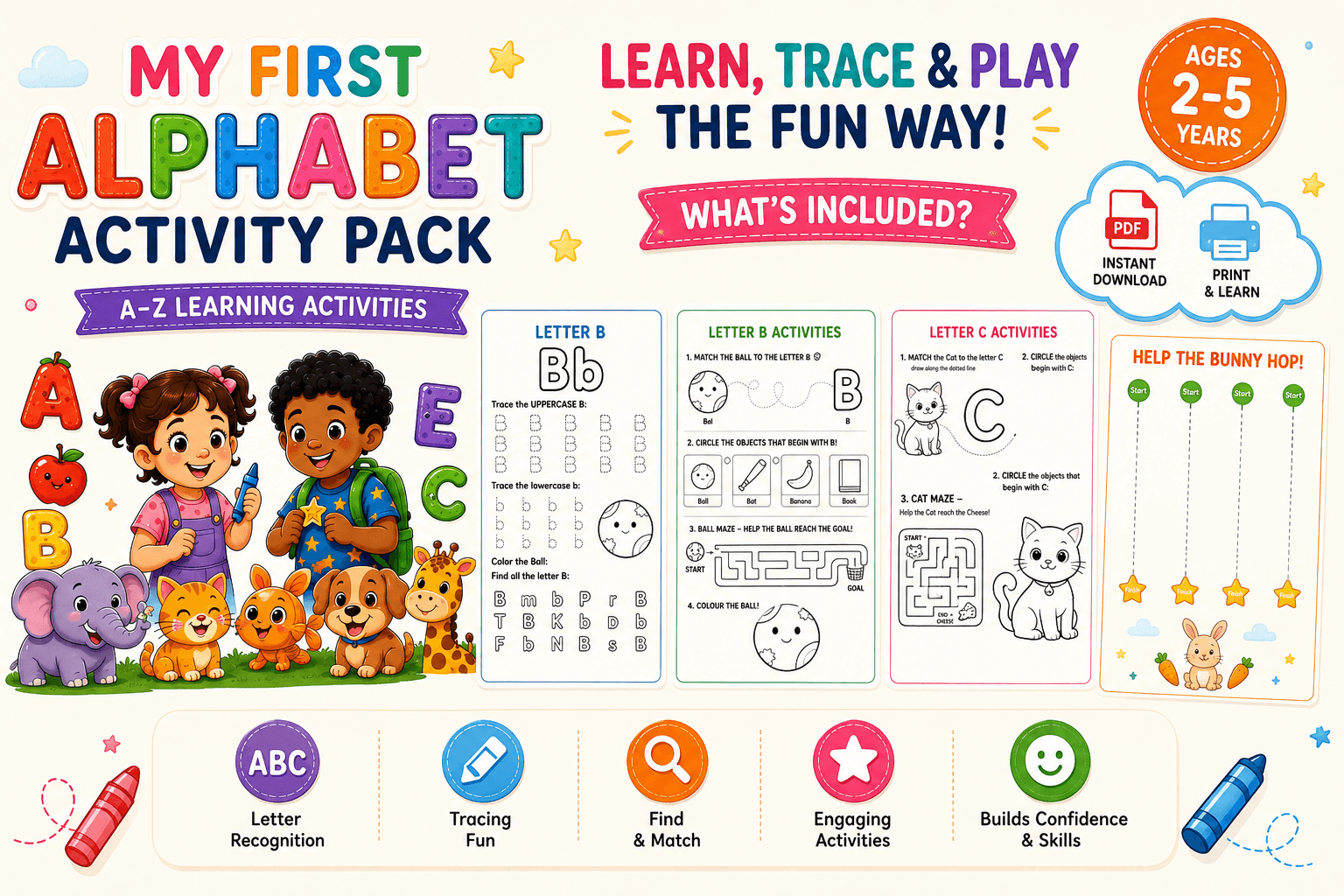
Two to three weeks on stroke pages, then move to My First Alphabet Activity Book.
If your child is already recognising letters, skip ahead to Alphabet Adventures — one letter per page, with a picture word and a tracing line.
How much is enough
One page a day is more than enough at nursery level. Two if your child asks for another, never more than that because the point is that they want to come back tomorrow.
A ten-minute session that ends while they're still enjoying it beats a thirty-minute session that ends in a negotiation. This is the single most common mistake parents make with worksheets at this age.
Don't do worksheets every day either. Four days a week is plenty. The pack isn't going anywhere and you own it forever.
Printing these at home
All our nursery worksheets print on standard A4. A few notes that save paper:
- Black and white is fine for tracing and matching pages. Save colour printing for the colouring pages where it doesn't matter anyway.
- Print single-sided. Children press hard at this age and double-sided pages show through.
- Thicker paper helps for anything that gets cut out. 100gsm or above if you have it.
- Print two or three copies at once of tracing pages. You will need them.
If you don't have a printer, any local print shop will do a full pack for ₹50–150 depending on page count. Take the PDF on a pen drive or email it to them.
Nursery vs LKG — which do you need?
| Nursery (3–4 years) | LKG (4–5 years) | |
|---|---|---|
| Letters | Recognise capitals | Write capitals, recognise small |
| Numbers | Count to 20, match 1–10 | Write 1–50, simple addition |
| Writing | Strokes and patterns | Letter formation |
| Words | Picture words only | Two and three letter words |
If your child is comfortable recognising letters and starting to write them, you want LKG worksheets instead.
If they're still working on holding a pencil, stay here.
More from activityforKydz
Common questions
Nursery is typically 3 to 4 years in Indian schools. Our nursery packs are designed for that range, though children vary enormously at this age. Go by what your child can do with a pencil, not by their birthday.