LKG Worksheets — Maths, English and Counting
LKG is the year the work gets real. In nursery your child was recognising letters. In LKG they're expected to write them, read two and three letter words, count past fifty, and do it while sitting at a desk for a proper stretch of time.
It's also the year most parents start worrying, because the gap between what school sends home and what your child can actually do on their own becomes visible for the first time.
These printable LKG worksheets cover both halves of the year — English and maths — in the order Indian classrooms teach them. Download the PDF, print what you need this week, print it again next month. One purchase, unlimited copies.
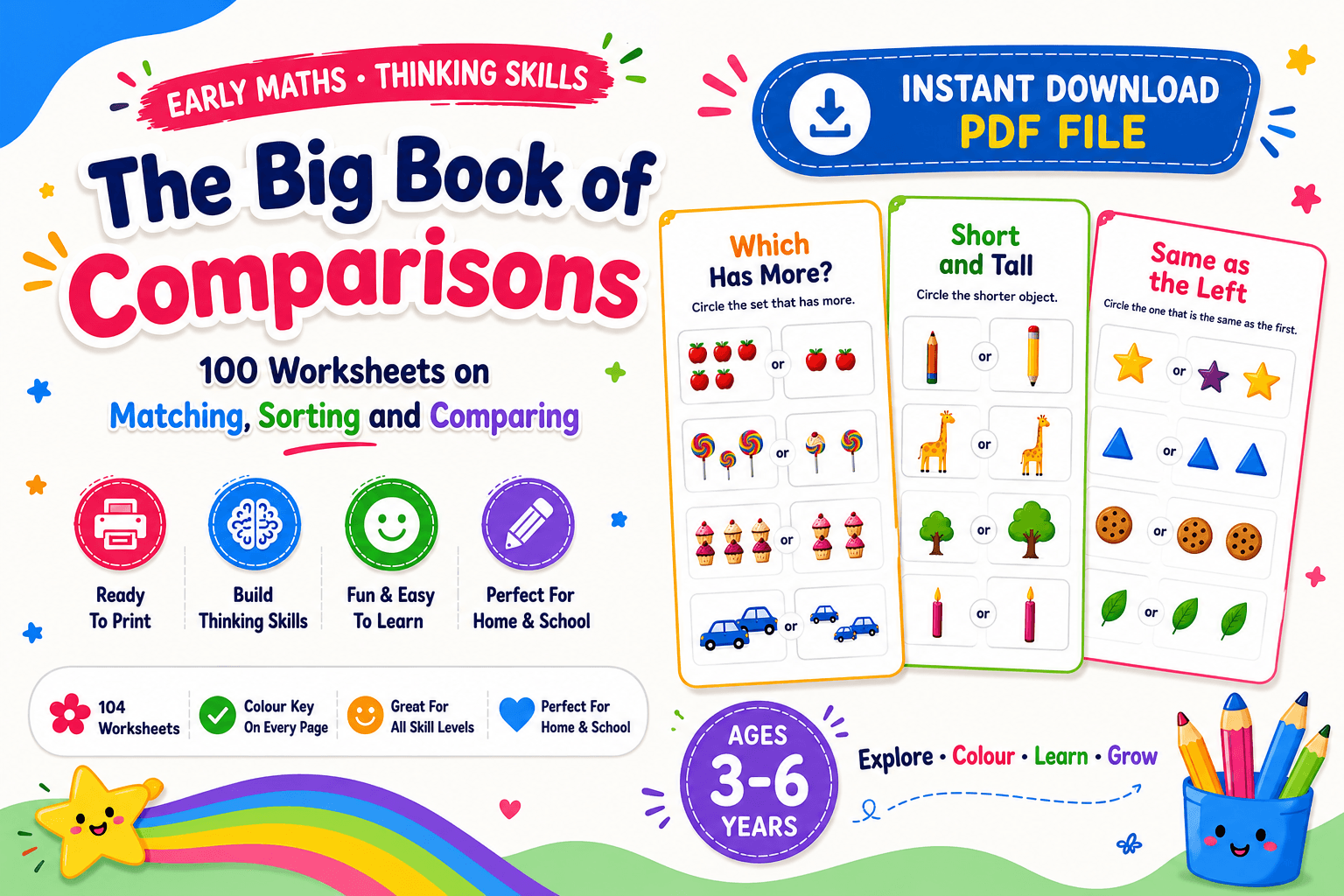
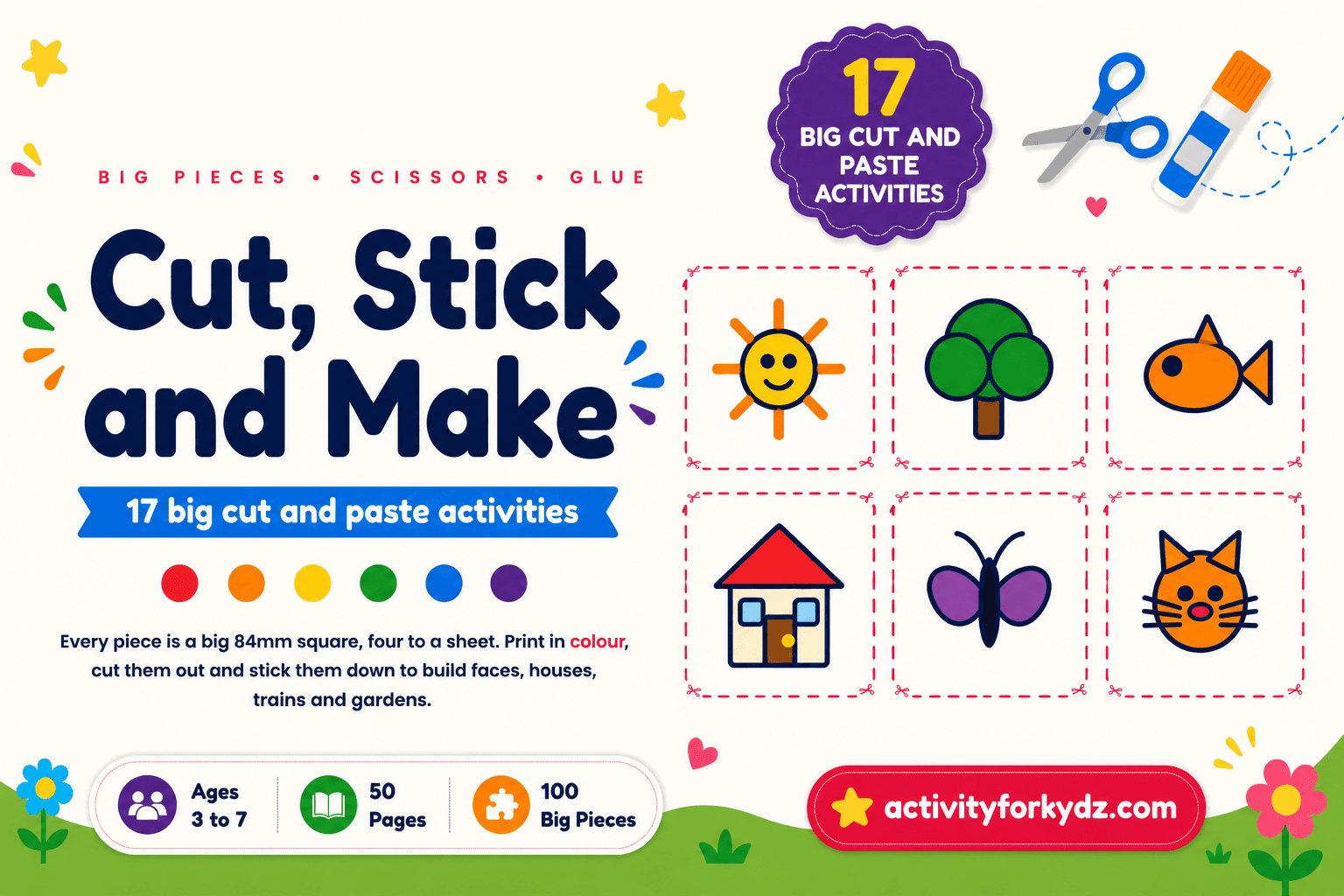
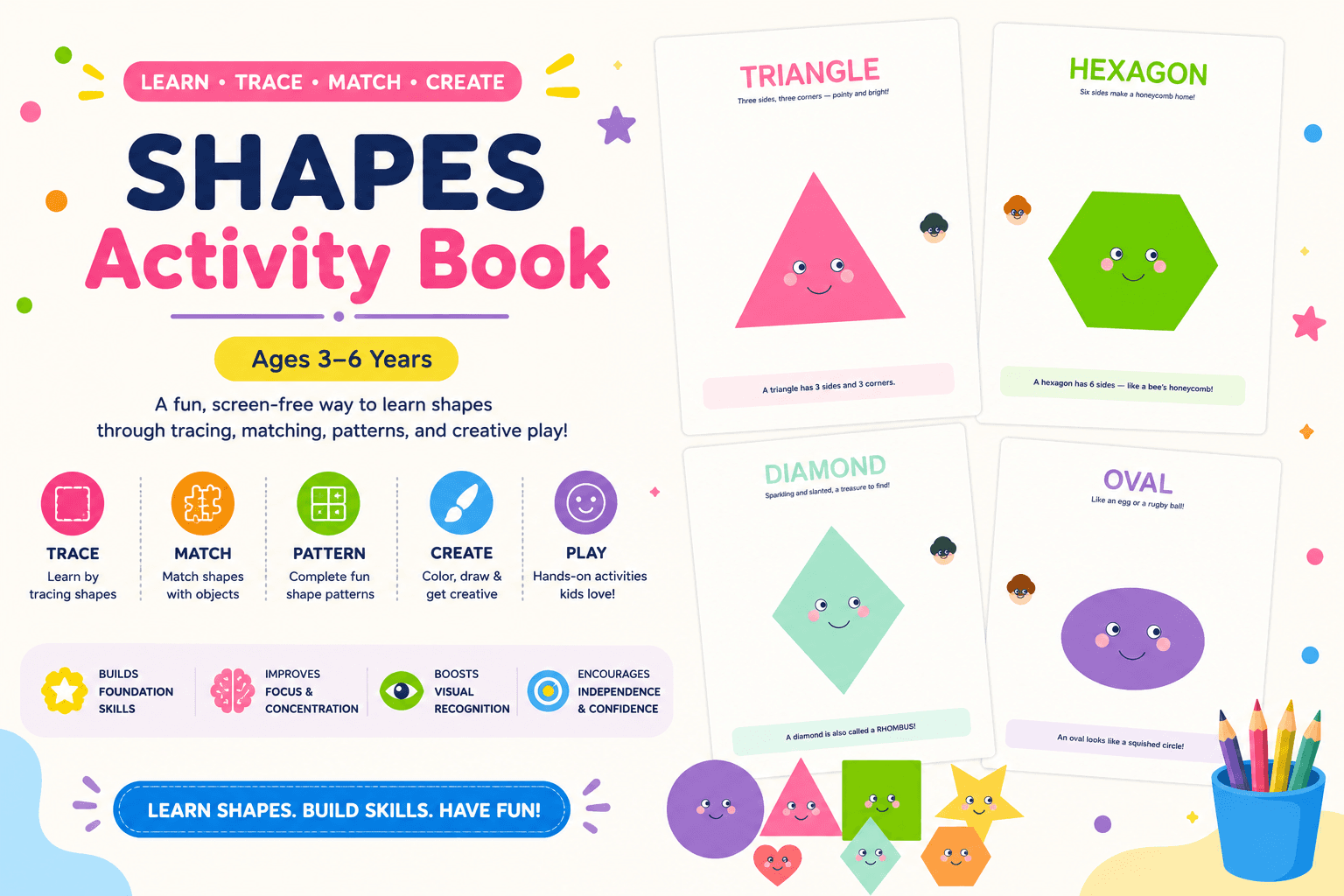
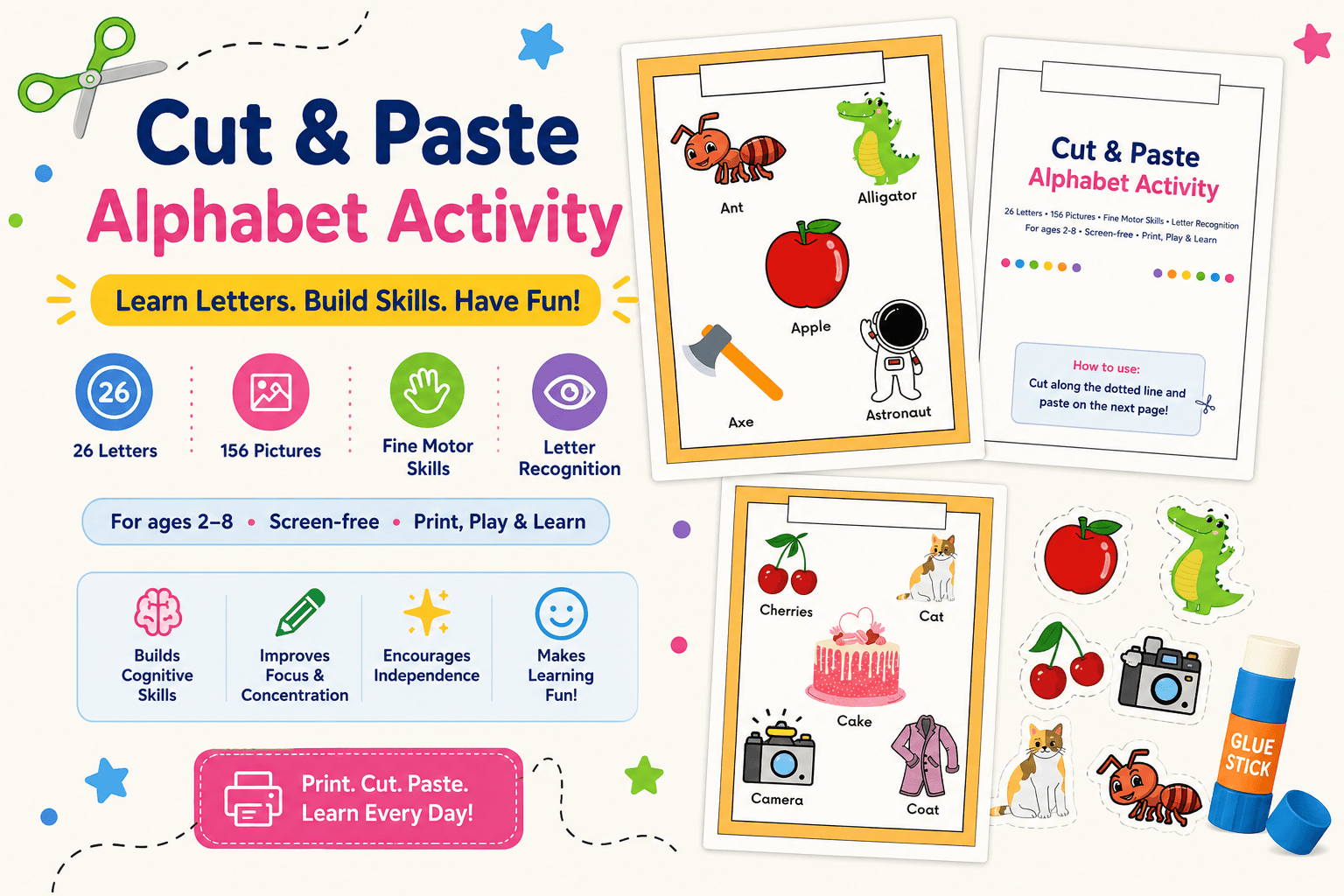
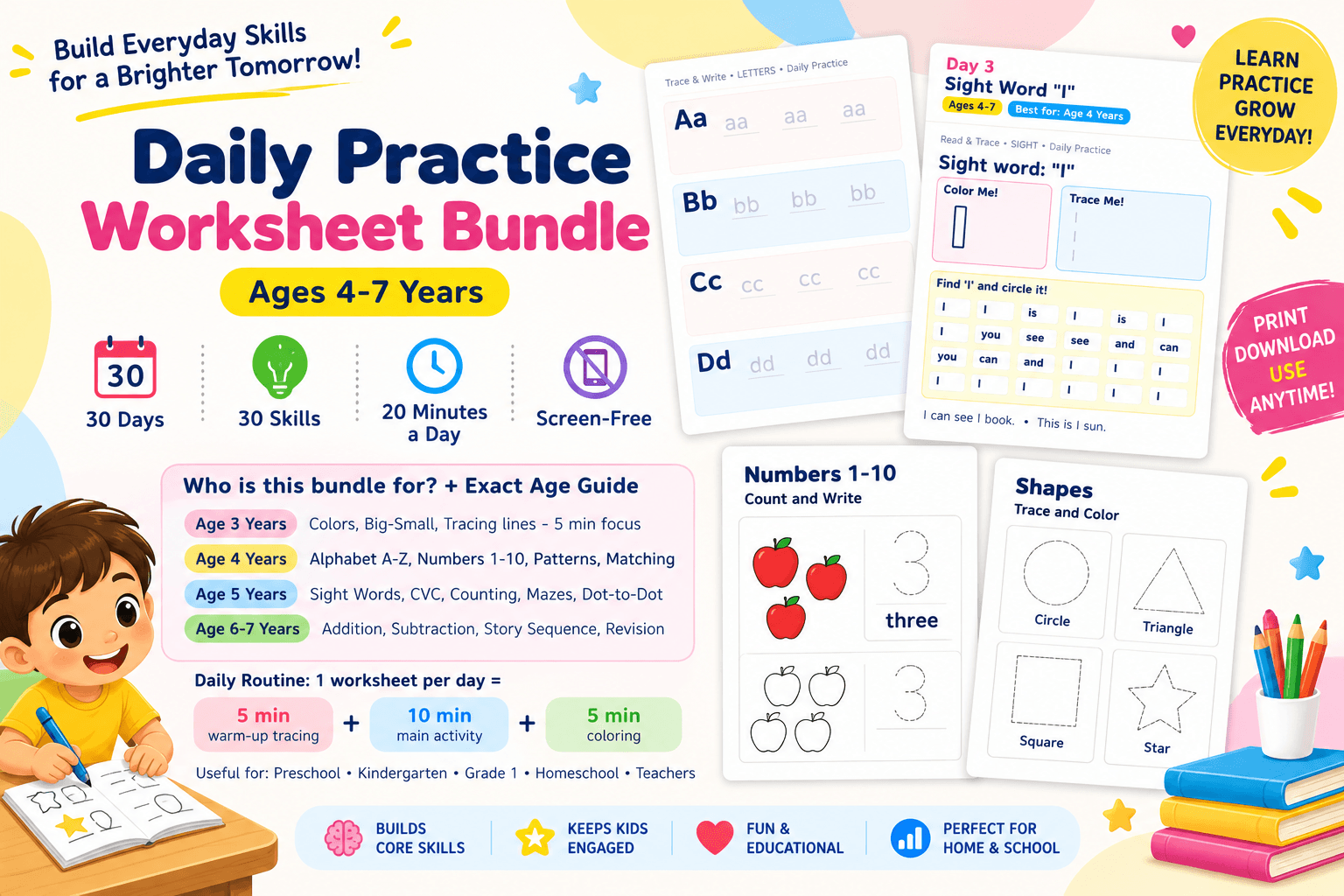
What LKG covers, term by term
Most Indian LKG syllabi follow roughly this shape. Yours may differ by a few weeks either way, but the sequence is near-universal:
Term 1 — English
- Capital letters A–Z, written not just recognised
- Small letters a–z, recognition first
- Matching capital to small
- Beginning sounds
Term 1 — Maths
- Numbers 1–20, writing
- Counting objects to 20
- Number before, after, between
- Basic shapes
Term 2 — English
- Two letter words (at, in, on, up)
- Three letter words — the CVC words (cat, bag, sun)
- Missing letters
- Simple picture-to-word matching
Term 2 — Maths
- Numbers 21–50, then 51–100
- Simple addition with pictures
- Bigger and smaller
- Patterns
The two things that trip children up most in LKG are small letters (b/d and p/q reversals are completely normal and not a warning sign at this age) and counting past twenty, where the number names stop following a pattern.
Where to start
If your child is at the beginning of LKG:
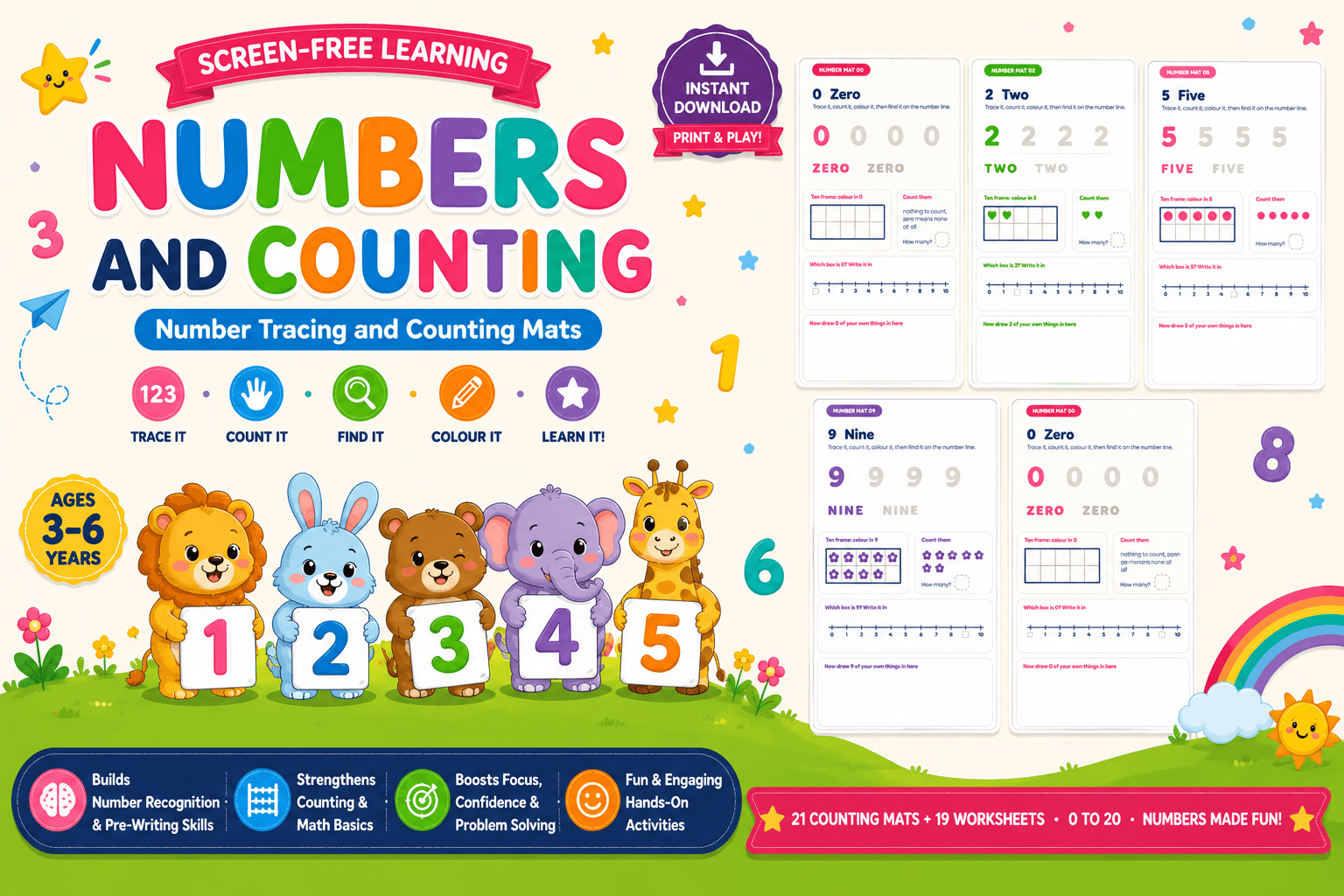
Start with Alphabet Adventures for letter formation, and Numbers & Counting Mats for the 1–20 work.
If your child is mid-year and reading is beginning:
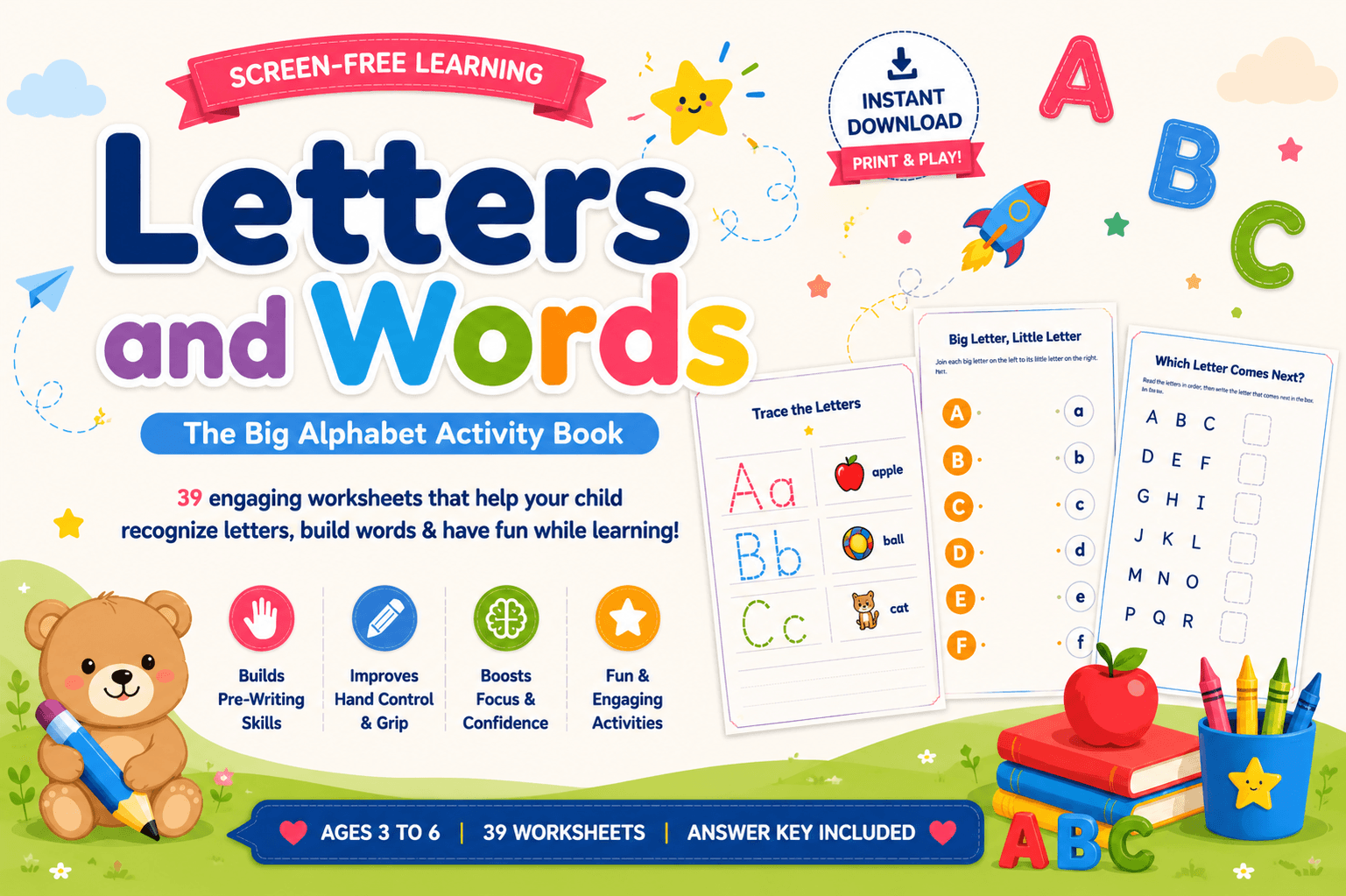
Letters & Words Activity Book is the one you want. It covers two and three letter words, missing letters and word building — which is exactly the part of LKG most children need extra practice on.
If your child finishes worksheets too fast and complains they're boring:
Cut, Stick and Make puts the same skills inside an activity that doesn't feel like homework.
About "CBSE pattern" LKG worksheets
You'll see this phrase everywhere, so it's worth being straight about it.
CBSE does not prescribe a formal syllabus for LKG. The board's structured curriculum begins at Class 1. What schools call "CBSE pattern LKG" is really a widely-adopted convention that CBSE-affiliated schools follow, based on the NCERT preschool guidelines and the Vidya Pravesh framework.
In practice that means the content is fairly standard across schools — which is why our worksheets line up well with what your child is being taught. But no one selling LKG worksheets can honestly claim official CBSE certification, and you should be suspicious of anyone who does.
What matters is whether the difficulty matches your child, not the label on the cover.
How much practice at LKG level
One worksheet a day, five days a week, is a good rhythm at this age. Fifteen to twenty minutes.
More useful than volume: do the same worksheet twice, a week apart. Retention at four and five years old comes from spaced repetition, not from doing forty different pages.
This is another argument for printables — printing the same page again costs you nothing.
If your child is behind on something specific, drill that one thing for ten minutes rather than doing a broad mixed page. If they're ahead, move to UKG worksheets rather than doing more of the same level.
Signs your child is ready to move up
Move to UKG-level material when your child can:
- Write all capital letters without a model to copy from
- Read simple three letter words without sounding out each letter
- Count to 50 reliably and write numbers to 20
- Complete a worksheet page without needing you sitting next to them
That last one matters more than the academic markers. Independent working is the skill UKG assumes.
More from activityforKydz
Common questions
LKG (Lower Kindergarten) is usually 4 to 5 years in Indian schools, sitting between nursery and UKG. Some schools call it Junior KG or Prep.