Tracing Practice, From First Lines to Full Letters
Tracing is the most underrated worksheet type there is, because it looks like the child isn't doing anything. They're just following a dotted line. No answers, nothing to mark, nothing to be right or wrong about.
What's actually happening is the entire physical foundation of handwriting. Every letter in English is made from four movements — the vertical line, the horizontal line, the curve and the diagonal. A child who can execute those four cleanly learns to write in a fraction of the time of one who's been copying letter shapes without them.
These printable tracing worksheets run the full sequence: first lines, then shapes, then letters, then numbers, then cursive joins. Download the PDF and print each page as many times as your child needs — which, for tracing, is usually a lot.
The tracing sequence, in order
Working through these in order takes most children about a year. Skipping ahead is the most common cause of handwriting frustration.
Stage 1 — Pre-writing strokes (ages 2–3.5)
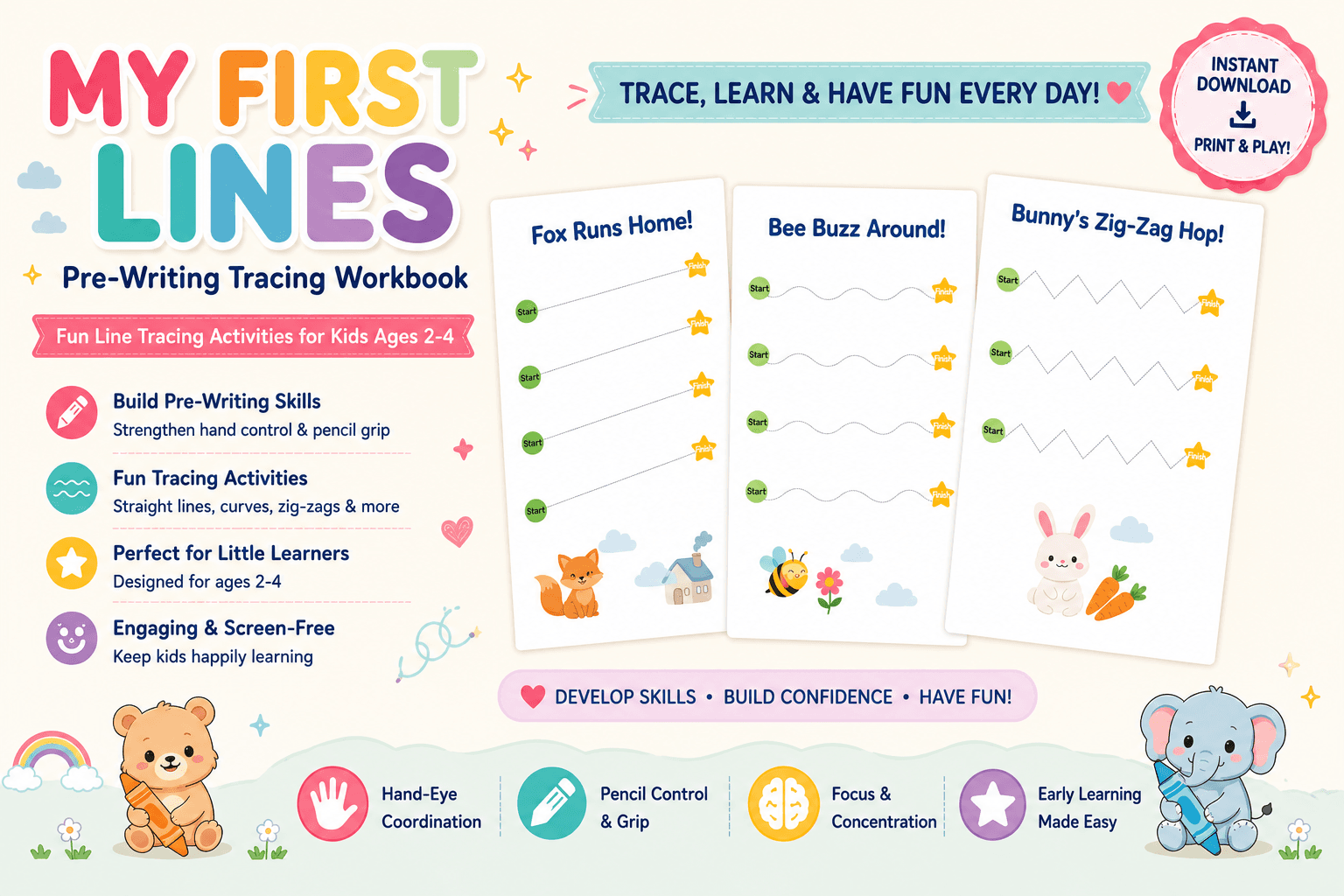
Vertical lines, horizontal lines, circles, crosses, diagonals, zigzags, waves, loops.
No letters at all. This is My First Lines.
Stage 2 — Shapes (ages 3–4)
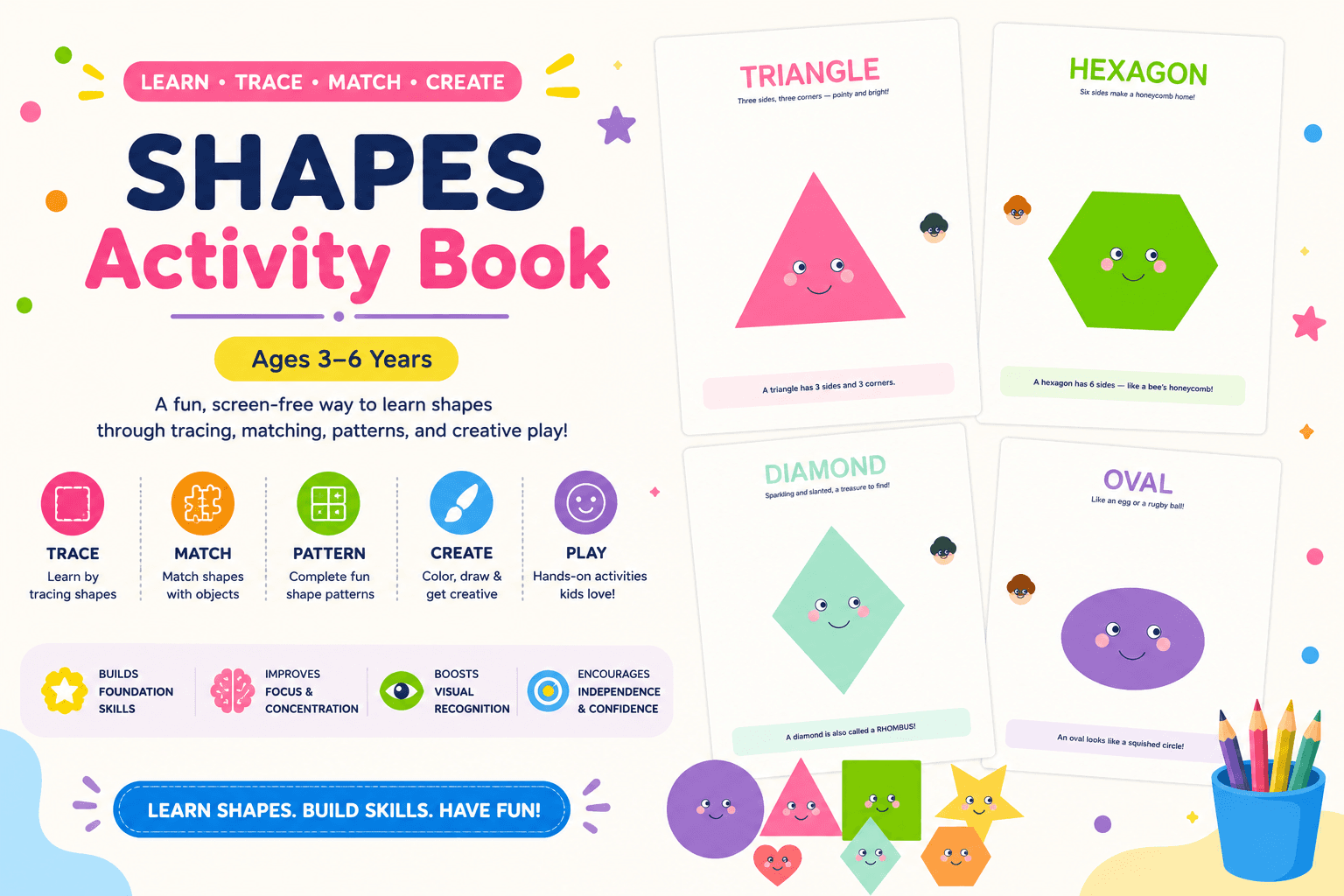
Squares, triangles, rectangles, stars. These combine strokes and require planning a whole path in advance, which letters also demand.
Shapes Activity Book covers this stage, with a tracing page for each of 10 shapes.
Stage 3 — Capital letters (ages 3.5–5)
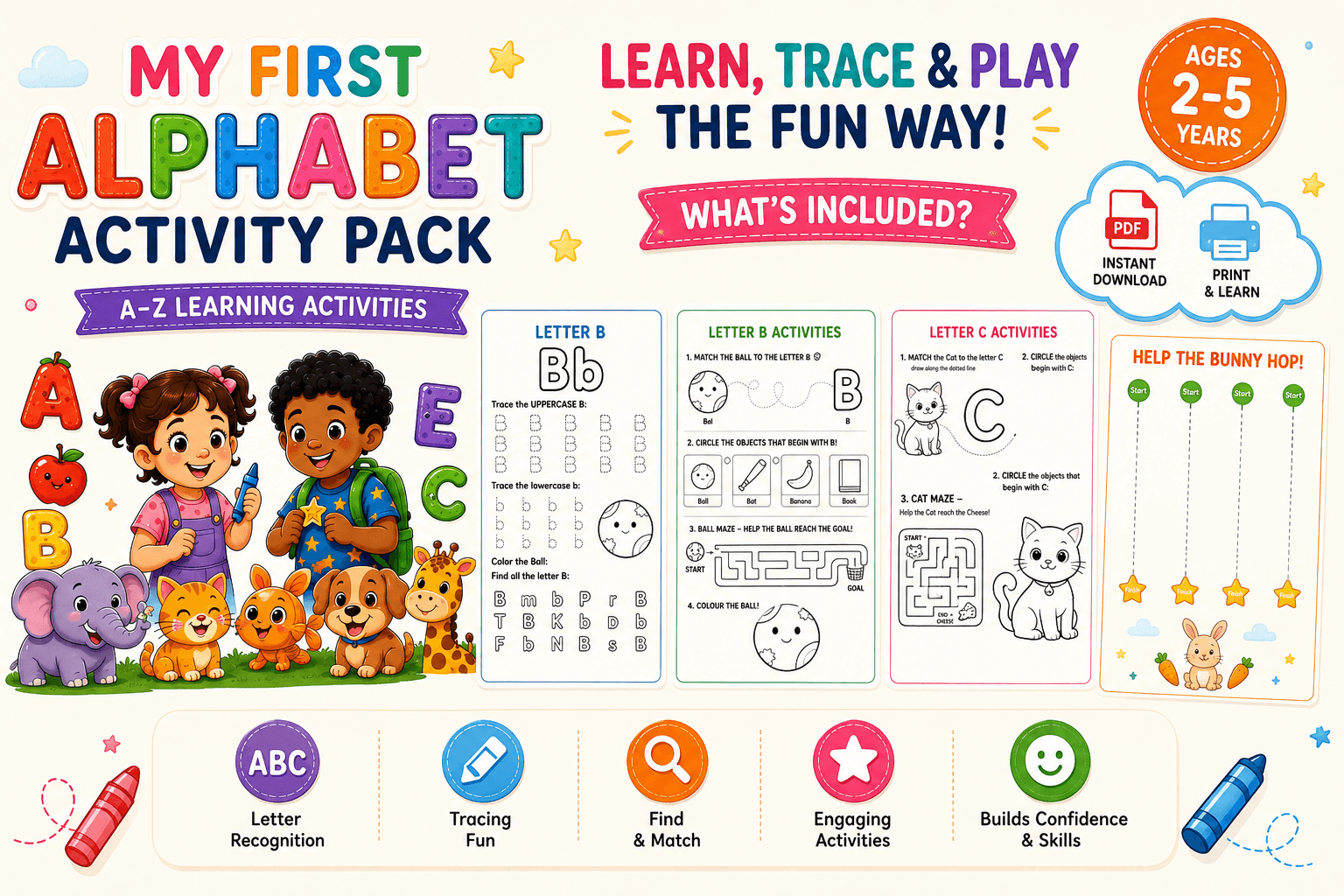
Simplest strokes first — L, T, I, E, F, H — before the curved and diagonal letters.
Stage 4 — Numbers (ages 4–5)
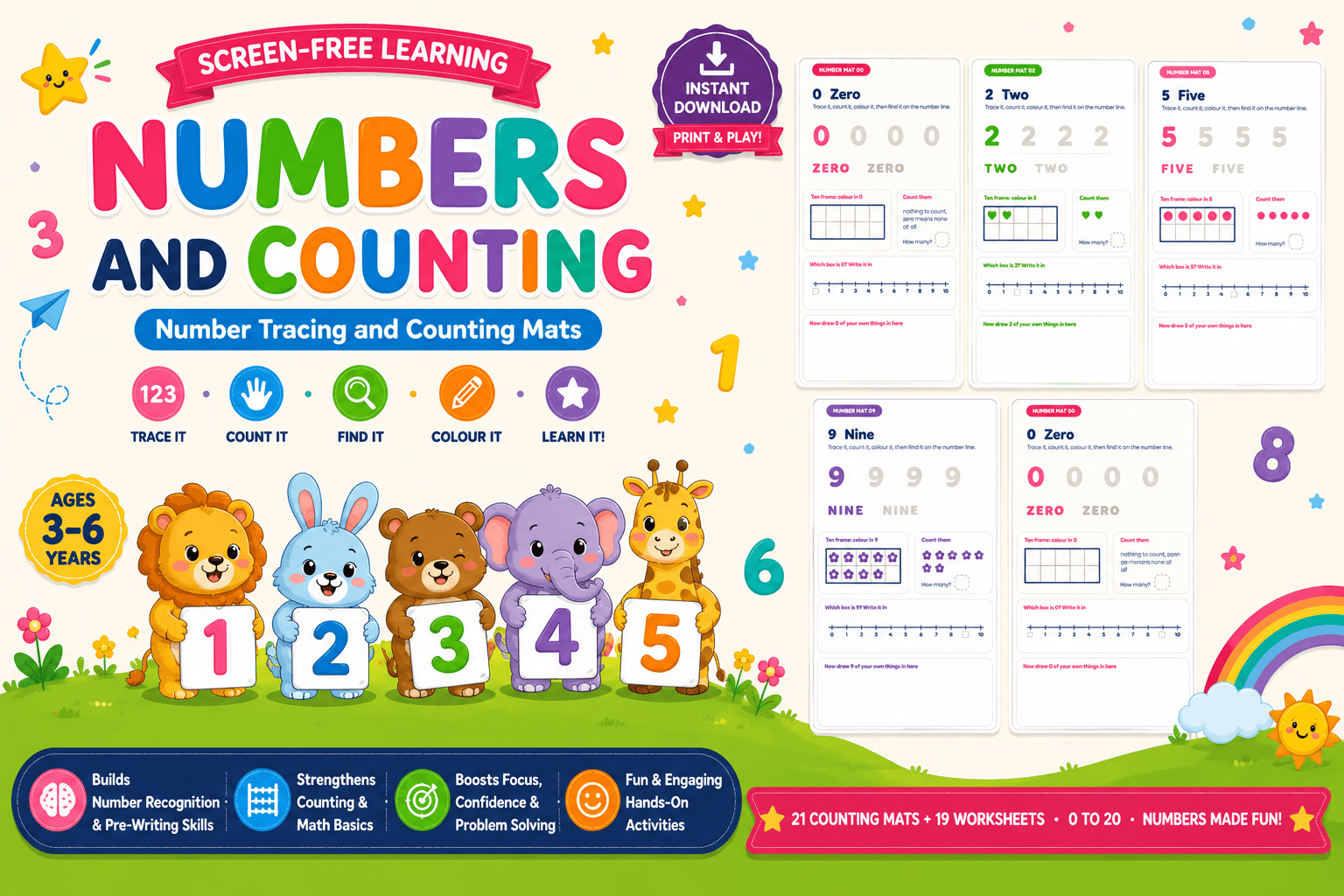
Numbers 0 to 20, with counting, ten frames and first sums.
Stage 5 — Small letters (ages 4–6)
Harder than capitals: descenders, ascenders, and the b/d/p/q confusions.
Stage 6 — Cursive (ages 6+)
The six basic cursive strokes, then letters, then joining.
How to actually use a tracing worksheet
Most of the value gets lost because of how tracing sheets get used. The page is not the activity — the movement is.
Finger first, pencil second. Have your child trace the shape with their index finger before picking up a pencil. This builds the motor pattern without the added difficulty of gripping and controlling a tool. Do this every time you introduce a new shape.
Say the movement out loud. "Down, and around." "Across, then down." Children who verbalise the stroke learn it faster and are far less likely to develop backwards letter formation, which is very hard to unlearn once it sets.
Start at the top, always. The single most important habit. A child who starts letters from the bottom will hit a wall at cursive and their writing speed will never quite catch up. Watch where the pencil starts, not just whether the result looks right.
Big before small. Trace in the air, on a table with a finger, in a tray of rice or atta, then on paper. Large movements use the shoulder and elbow; small ones need finger control that develops later.
Stop while they're still enjoying it. Ten minutes is plenty.
The pencil matters more than the worksheet
A standard adult pencil is genuinely difficult for a three-year-old to control. If tracing is going badly, change the tool before changing the worksheet:
- Broken crayons. Snap them in half. A short crayon physically cannot be held in a fist grip — it forces a three-finger hold.
- Triangular pencils or chunky grips. Widely available and worth the ₹50.
- Vertical surfaces. Tape the worksheet to a wall or use an easel. Working upright builds wrist extension and shoulder stability, which are what pencil control actually rests on.
Laminate and reuse
For tracing specifically, this saves a lot of paper:
Print the page, laminate it or slide it into a clear plastic sleeve, and use a whiteboard marker. Your child traces, wipes, traces again. One printed page becomes fifty.
This works especially well for Numbers & Counting Mats, which are designed for it.
When to move on from tracing
Move from tracing to independent writing when your child can:
- Trace a shape staying on the line most of the way
- Start each stroke in the right place without a reminder
- Copy a shape shown beside them, not just trace over it
That middle step — copying beside rather than tracing over — is the one most worksheet sets skip, and it's where children get stuck. Fold the page so the model is next to the empty space rather than under the pencil. If they can do that, they're ready to write.
More from activityforKydz
Common questions
Pre-writing stroke tracing suits 2.5 to 3 years. Letter tracing is usually realistic from 3.5 to 4. Go by whether they can hold a crayon and make a deliberate mark, not by age.