A to Z, One Letter at a Time
Twenty-six letters, each with a capital and a small form, each with a sound that doesn't always match its name. It's a lot to ask of a four-year-old, and the way most alphabet material is organised makes it harder than it needs to be.
The usual approach is A, B, C, D — alphabetical order, straight through. That's the worst possible sequence for a child learning to write, because it puts the hardest letters early and groups letters that look nothing alike.
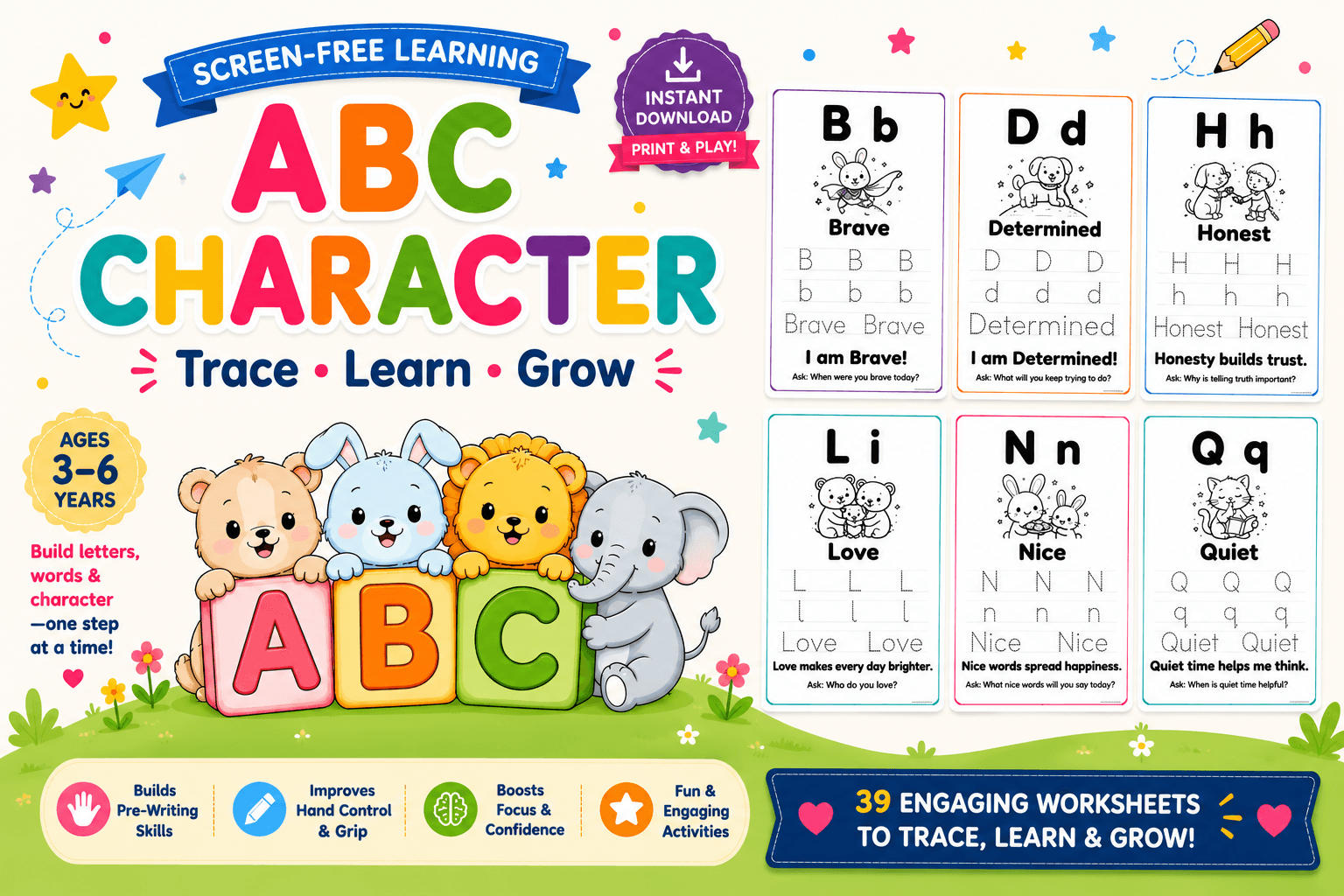
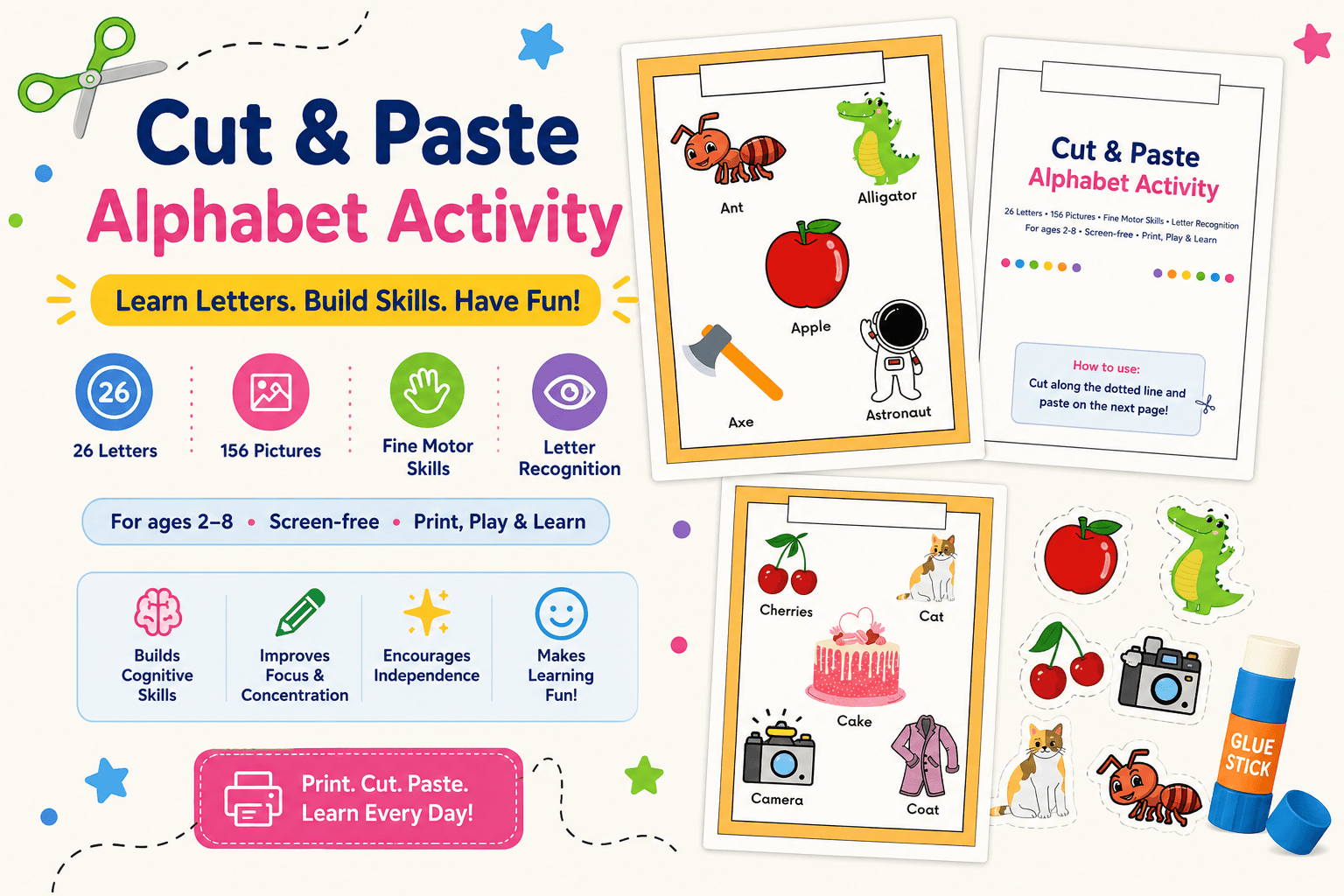
These printable alphabet worksheets are ordered by how the letter is formed, not by where it sits in the alphabet. Download the PDF, print a page a day, and print it again when you need the repetition.
The letter order that actually works
If you're teaching letter writing rather than letter recognition, teach in stroke groups:
Group 1 — straight lines only
L, T, I, E, F, H
All made from vertical and horizontal lines. No curves, no diagonals. Most children manage these within a week.
Group 2 — curves
C, O, Q, G, S
Single continuous curves. The trick is starting at the top and going anticlockwise — children who learn C clockwise struggle with every other curved letter later.
Group 3 — lines plus curves
D, P, B, R, U, J
Combining the first two groups.
Group 4 — diagonals
V, A, W, X, Y, K, M, N, Z
Hardest, because diagonals require crossing the body's midline. Leave these until last.
Alphabetical order puts A — a diagonal letter — first. That's why so many children get stuck on the very first letter they're taught and decide writing is hard.
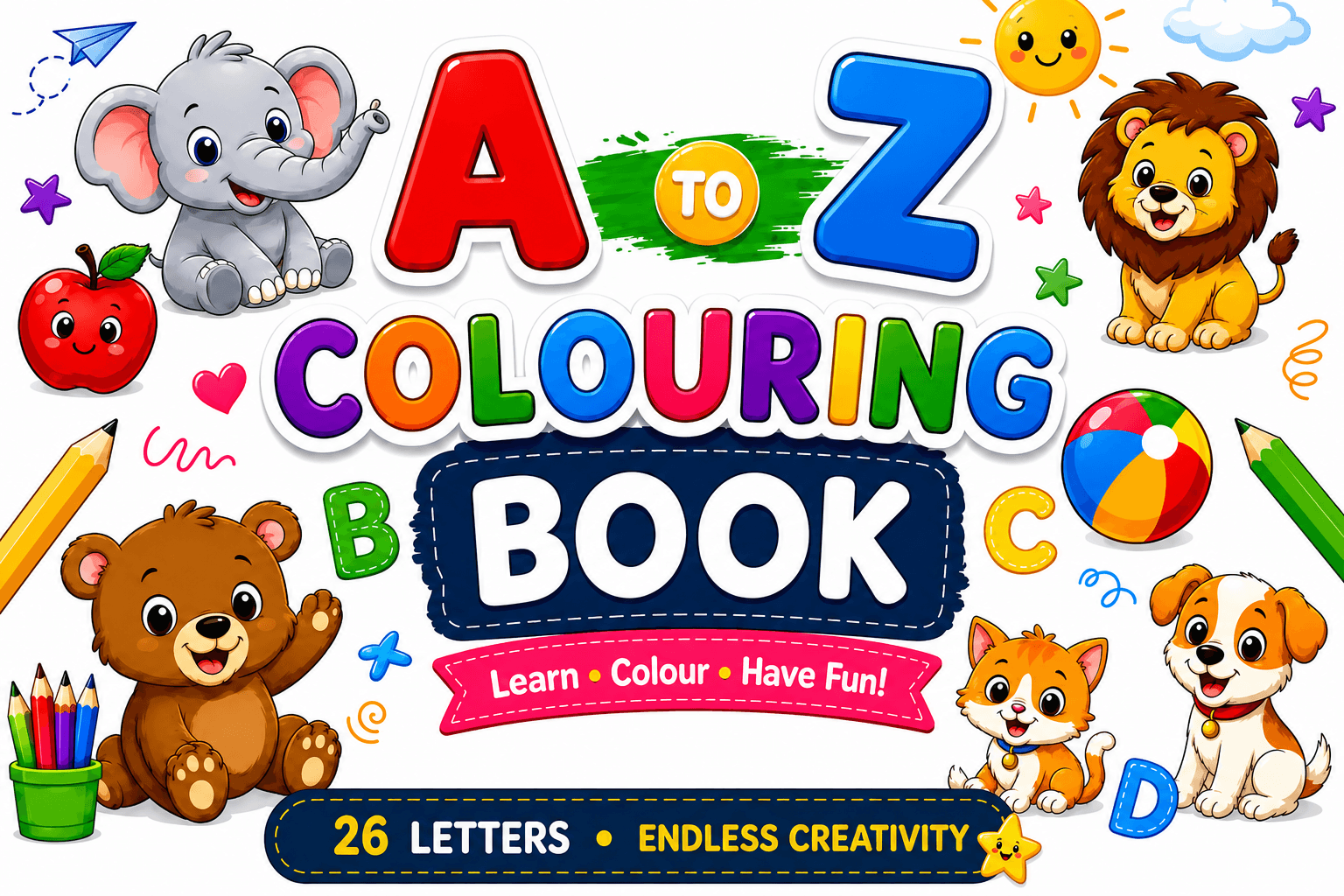
Our Alphabet Adventures pack is arranged alphabetically because that's what schools use and what parents expect, but you can work through it in the stroke order above by just taking the pages out of sequence. It works noticeably better.
Recognition before writing, always
Two different skills, and they don't arrive at the same time.
Letter recognition — knowing that this shape is called "em" — comes first and is mostly visual memory. A three-year-old can recognise letters long before their hand can form them.
Letter formation — being able to draw it — requires fine motor control that develops on its own schedule and can't be rushed by more worksheets.
If your child recognises letters but can't write them, they don't need more alphabet worksheets. They need pre-writing tracing practice — lines, curves and zigzags — to build the hand control first. Trying to force letter formation before that is where frustration comes from.
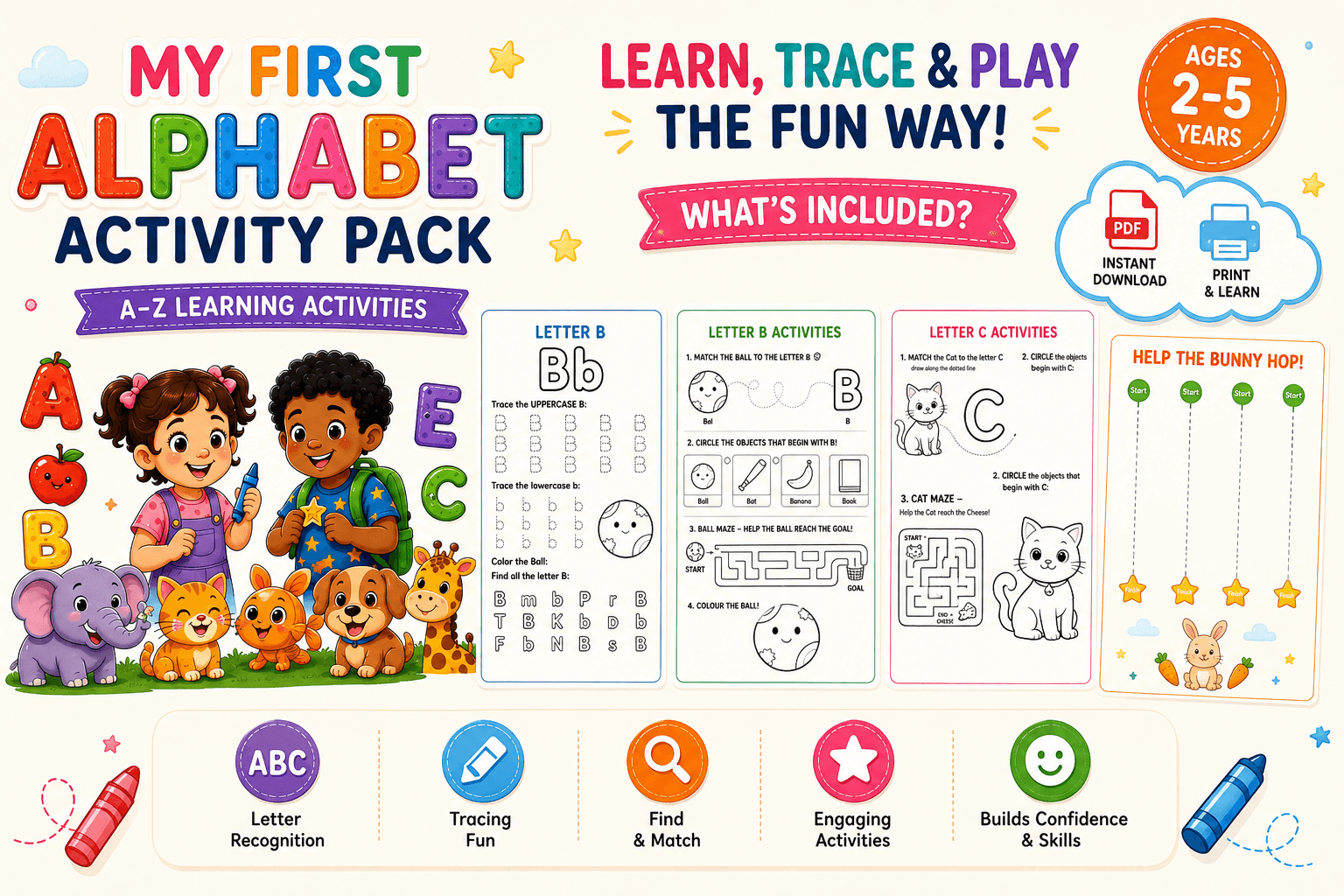
My First Alphabet Activity Book is the recognition-stage pack. Alphabet Adventures is the formation-stage one.
Capital or small letters first?
Capitals first. Almost every Indian school does this and it's the right call:
- Capitals are made of simpler strokes — more straight lines, fewer curves
- Capitals all sit on the line with no descenders below it
- Capitals are more visually distinct from each other, so fewer confusions
- Only a handful of capital pairs look alike, versus b/d, p/q, m/n, u/v in small letters
Introduce small letters once capitals are fluent, and introduce them matched to their capital rather than as a fresh set of 26. A–a, B–b, and so on. Matching worksheets do this well and it halves the perceived workload.
When letters come out backwards
Reversals — b written as d, s written backwards, whole words mirror-written — are completely normal until about age seven. They are not an early sign of dyslexia and they don't need correcting aggressively.
What helps:
- More writing practice, not more correction
- Tracing with a finger before using a pencil, so the movement is learned physically
- A visual cue for the common pair: lowercase b faces the same way as a capital B
- Ignoring it, mostly
What doesn't help: pointing it out every time. Children who become anxious about reversals write less, and writing less is the only thing that genuinely delays the fix.
Missing letters and word building
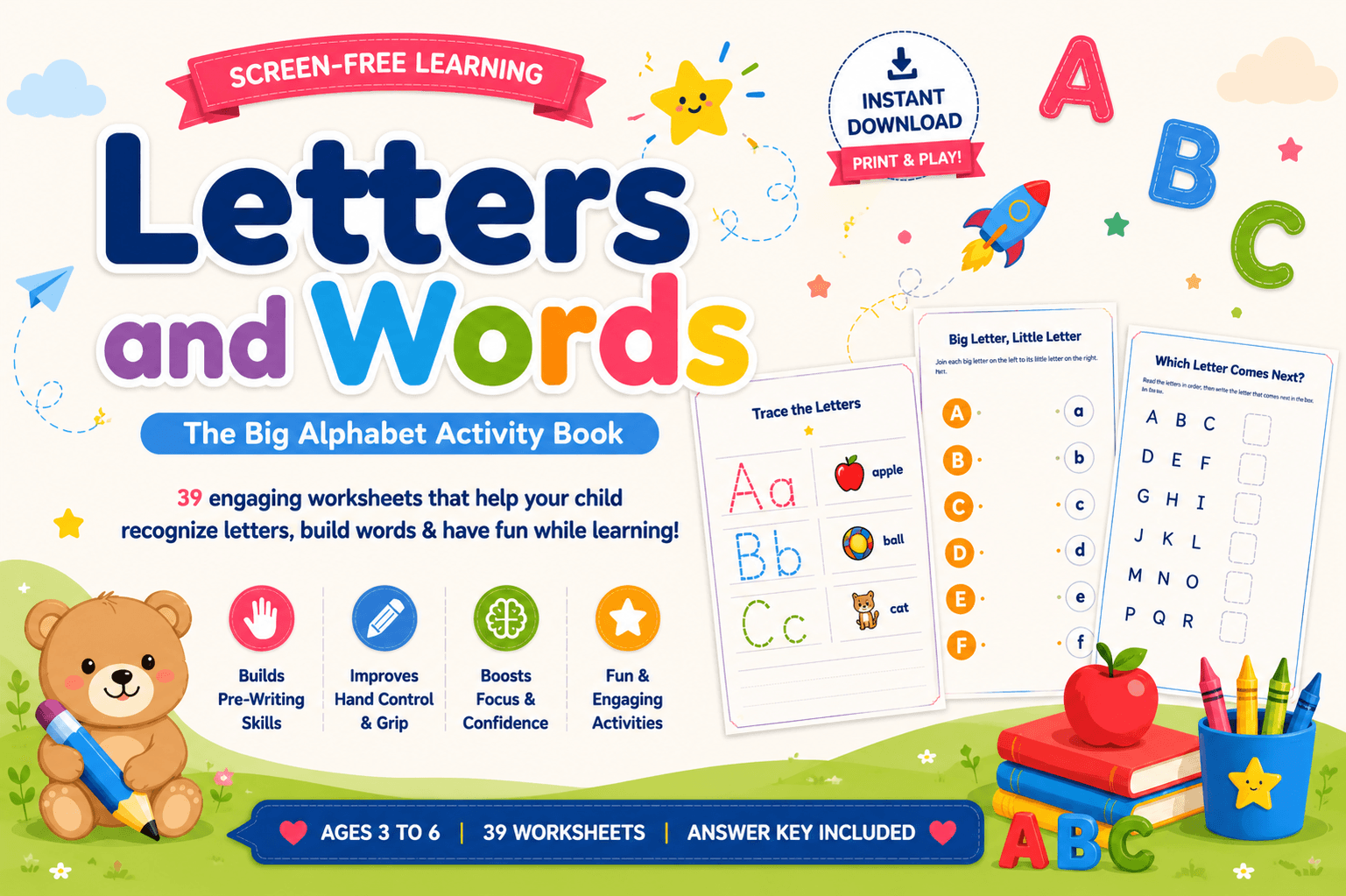
Once individual letters are secure, the next step is putting them into words. This is where Letters & Words comes in — it covers fill-in-the-missing-letter pages, two and three letter word building, and picture-to-word matching.
Missing-letter worksheets are underrated. They force a child to think about a letter's sound and its position, not just its shape, which is the bridge between knowing the alphabet and actually reading.
After the alphabet
Once your child is writing all 26 letters comfortably:
- Three letter words → Letters & Words
- Hindi varnamala → Hindi worksheets
- Sentences → UKG worksheets
More from activityforKydz
Common questions
Recognition activities suit 3 years and up. Writing practice is usually realistic from around 3.5 to 4, but it depends far more on pencil control than on age. If your child can't yet trace a straight line, start with tracing worksheets instead.